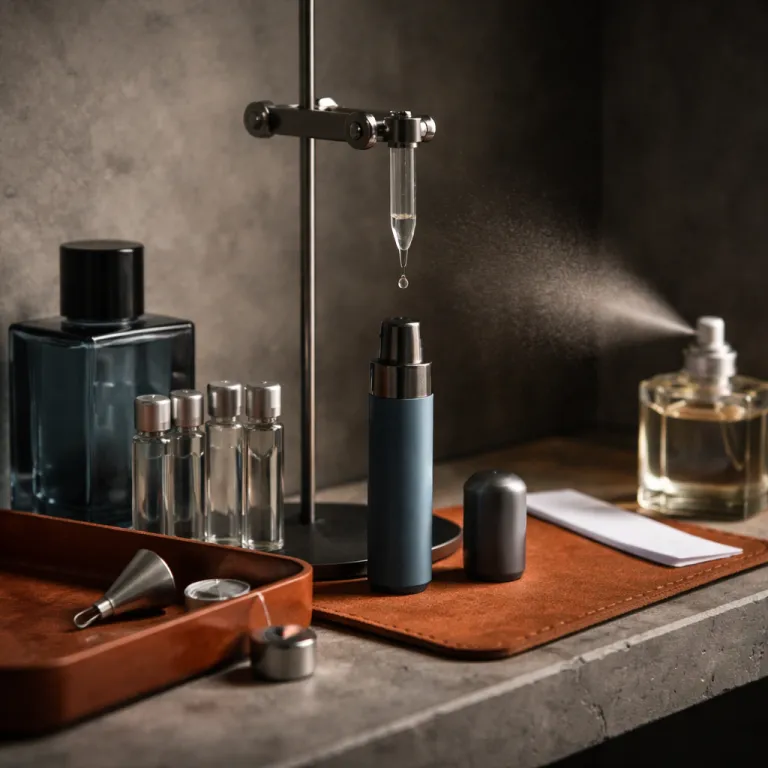
The end of the mono perfume era
The phrase “death of the signature scent” misunderstands what is really happening. A modern fragrance wardrobe does not kill loyalty; it replaces a single rigid identity with a small, intentional set of perfumes that move with your life. One carefully chosen eau de parfum can still be your anchor while other fragrances orbit around it.
Think of your bottles as clothes in a wardrobe rather than trophies on a shelf. You would not wear the same wool coat in August and January, so why insist on one perfume for every climate, mood and room? The new grammar of scent says that a customer can love one parfum fiercely and still reach for other perfumes when the weather, the company or the setting changes.
Industry data and retailer feedback back this shift toward curated fragrance wardrobes rather than single icons. NPD Group and Circana trend reports from 2022–2023 note that prestige fragrance buyers increasingly own multiple active bottles, while retailer panels at chains such as Sephora and Douglas indicate that many women and men now keep between five and ten fragrances, rotating them like outfits instead of clinging to one perfume for decades. Yet the enduring success of heritage maisons shows that a signature still matters; it just lives inside a wider set of choices.
Look at how brands structure their shelves. A maison such as Chanel or Guerlain still leads with a flagship eau de parfum like Chanel N°5 or Guerlain Shalimar, but right beside it you will find travel sprays, miniature fragrance sets and seasonal flankers. Those smaller sets invite you to build a fragrance wardrobe by mood, while the classic perfume remains the reference point that defines the maison’s style.
For everyday fragrance enthusiasts, this is liberating rather than confusing. You can enjoy a bright floral eau de parfum such as Dior J’adore on a spring morning, then shift to a smoky, resinous parfum at night without betraying your olfactory identity. The key is to read the notes, understand how each formula behaves on your skin and assign it a role in your personal wardrobe instead of chasing endless duplication.
There is also a cultural undercurrent driving this change. Social media and online communities have made it free and easy to compare fragrances, swap spray vials and share impressions in real time. When you can sample a luxury fragrance through decants or free samples before committing, the old pressure to pick one perfume for life feels less like romance and more like unnecessary constraint.
At the same time, the market for vegan and certified cruelty free options has widened the palette. Euromonitor and Mintel category snapshots from recent years show double digit growth for vegan perfume and cruelty free labels in several European markets. A customer who once wore a single animalic chypre might now keep a plant based, ethically positioned floral for daytime and a richer, more sensual parfum for evening. This ethical dimension becomes another axis in the fragrance wardrobe, alongside season, occasion and price.
Even the language around gifting reflects the shift. Instead of one large bottle wrapped in cellophane, many people now choose a discovery set as the perfect gift, especially for women who enjoy exploring new notes. Those discovery sets encourage the recipient to build a wardrobe of fragrances that fit different rooms and roles, rather than forcing one scent to do every job.
Five bottles, one self: the new grammar of a fragrance wardrobe
For most enthusiasts, a five bottle fragrance wardrobe hits the sweet spot between variety and coherence. You gain enough different scents to suit work, weekends and late nights, yet your shelf does not become a chaotic cart of impulse buys. Think of it as a capsule collection of perfumes, each with a clear brief.
The first role is the anchor, your closest thing to a signature perfume. This is usually an eau de parfum or parfum that feels like your skin but better, with notes you never tire of such as bergamot, petitgrain or a soft vanilla orchid accord. You reach for this fragrance on days when you want to feel like yourself, not perform a character.
Second comes the weather scent, tuned to climate and light. In heat, that might be a sheer eau de toilette built around citrus, petitgrain and airy floral notes that stay fresh rather than cloying, like Acqua di Parma Colonia or a light cologne style spray. In cold months, the weather slot in your wardrobe might hold a denser eau de parfum with amber, woods and perhaps a touch of Turkish rose for plushness.
The third bottle is your evening or event fragrance. Here, luxury fragrance houses such as Maison Francis Kurkdjian, Dior or Tom Ford often shine, because they design perfumes with strong diffusion and memorable trails. This is where you might place a richer parfum with Turkish rose, vanilla orchid and smoky resins, something that turns heads without shouting.
Fourth is the workday scent, especially important if you share offices or commute in close quarters. A good work fragrance is polite but not dull, often a balanced floral or woody eau de toilette with moderate sillage and clean musky notes. It should feel almost cruelty free in its impact on others, never overwhelming colleagues or passengers.
The wildcard is the fifth bottle, and it keeps your fragrance wardrobe playful. This might be an award winning niche perfume built around an odd material, or a limited edition eau de parfum that smells like rain on hot pavement. You will not wear this product every day, but when you do, it resets your nose and reminds you why you fell in love with scent.
Miniatures and fragrance discovery sets have become the training ground for this five bottle grammar. A well edited set of spray vials lets you test how different perfumes behave across a week, from gym bag to gallery opening. Brands know this, which is why many now offer discovery sets with free shipping or free delivery thresholds that nudge you toward trying several fragrances at once.
There is a gender story here too. Men who once felt confined to a single “office safe” cologne now experiment with floral notes, gourmand accords and even Turkish rose, helped by thoughtful guides to the world of men’s fragrance that challenge stereotypes. Interviews with perfumers such as Francis Kurkdjian or Christine Nagel often highlight how masculine compositions now borrow freely from traditionally feminine palettes. Articles that explore men’s fragrance beyond clichés show how a masculine wardrobe can include both crisp eau de toilette and softer eau de parfum without anxiety.
For women, the shift often means moving beyond the one romantic floral they received as a perfect gift in their twenties. A modern female fragrance wardrobe might pair a clean laundry like perfume for casual days with a darker, spiced parfum for late dinners, plus an explicitly vegan, cruelty free option for times when ethics take center stage. Across genders, the pattern is the same: one anchor, several roles, a coherent but flexible olfactory identity.
Identity, loyalty and the fear of dilution
Not everyone welcomes the rise of the fragrance wardrobe. Older collectors and some niche purists argue that owning many perfumes dilutes your olfactory identity, turning scent into a disposable accessory rather than a deep personal signature. They worry that constant rotation makes it harder for friends and lovers to associate you with one unforgettable trail.
There is a kernel of truth in that concern. A single, consistent perfume can become a powerful emotional shorthand, the way a specific eau de parfum on a scarf can summon a person years later. When you split your time between ten fragrances, the imprint of any one perfume may feel weaker, especially to casual acquaintances.
Yet loyalty and variety are not mutually exclusive. You can still have a dominant scent that appears in most of your memories, while a small wardrobe of supporting perfumes handles edge cases such as heatwaves, black tie events or long haul flights. Think of it as a main theme with variations, not a playlist on shuffle.
Critics also point to the industry’s financial motives. Brands earn more when a customer keeps adding items to their cart, especially smaller bottles, discovery sets and limited editions with higher price per millilitre. The surge in fragrance sets, free samples and travel sprays is not pure generosity; it is a strategy to hook you into a cycle of constant novelty.
Consumers push back by becoming more informed. They read note lists, compare price per millilitre and pay attention to whether a product is genuinely cruelty free or just marketed as such. Many now seek vegan or vegan friendly formulations, asking hard questions about sourcing and testing rather than accepting vague green language.
There is also a growing appreciation for fragrance free spaces. Laundry detergents without added perfume, unscented body products and neutral home environments give your chosen fragrances room to breathe when you actually wear them. A thoughtful approach to perfume free routines can make your wardrobe feel sharper, because each scent has a clear stage rather than fighting with background aromas.
Ethical and sensory minimalism can coexist with a love of complex perfumes. You might keep your home mostly neutral, perhaps using a natural reed diffuser in one room, while reserving your strongest parfum for evenings out. This way, your fragrance wardrobe becomes a deliberate tool rather than a constant fog, and your signature moments stand out more clearly.
In the end, the fear of dilution often masks a deeper anxiety about changing cultural norms. The old script said that serious adults chose one perfume and stuck with it, while experimentation belonged to teenagers and trend chasers. The new script says that a confident adult can rotate fragrances with intention, just as they rotate clothes, playlists or wines, without losing their core self.
How to build a three bottle starter wardrobe without buying the same scent twice
If you are starting from one beloved perfume and want a small fragrance wardrobe, begin with three bottles. The goal is not to collect but to cover distinct roles without overlap, so you avoid paying twice for the same scent in different packaging. Think in terms of structure, texture and context rather than brand hype.
First, keep your current favourite as the anchor, provided it still feels like you. Identify its main notes, whether they are citrus and petitgrain, creamy vanilla orchid, or lush Turkish rose wrapped in musk. This reading of your existing perfume will guide you away from buying near duplicates that only change the logo and the price.
Second, add a contrast scent that solves a real gap. If your anchor is a dense, sweet eau de parfum, look for a light, breezy eau de toilette with more air between the notes and less sugar. If your daily perfume is a clean floral, consider a darker, resinous parfum for evenings, perhaps from a luxury fragrance maison that excels at depth.
Third, choose a functional outlier. This might be a very soft skin scent for close quarters, a crisp office appropriate eau de parfum, or a strictly seasonal fragrance that shines only in high summer or deep winter. The point is to add a bottle that earns its place in your wardrobe by doing a job no other perfume can do.
Discovery sets are your best ally in this process. A small discovery set with spray vials lets you test several perfumes over days, paying attention to how each fragrance behaves from first spray to drydown. Many maisons now offer such discovery sets with free shipping or free delivery, sometimes even including free samples that extend your testing window.
Pay attention to ethics and comfort as well as aesthetics. If cruelty free and vegan products matter to you, filter your search accordingly and read brand policies carefully rather than trusting vague labels. A clearly labelled vegan, cruelty free eau de parfum that aligns with your values will feel more comfortable in your wardrobe than a questionable bargain, no matter how tempting the price.
When shopping online, resist the urge to treat your basket like an endless cart of impulse buys. Instead, ask whether each potential product adds a new role, a new texture or a new emotional colour to your fragrance wardrobe. If two perfumes feel like twins on your skin, keep the one that moves you more deeply and let the other go.
Finally, remember that a perfect gift set or miniature coffret can be a low risk way to experiment. An award winning maison might offer a curated set of its best selling fragrances, giving you a crash course in its style without forcing a full bottle commitment. From there, you can decide which scent deserves a permanent place in your wardrobe and which should remain a pleasant fling.
Key figures shaping the modern fragrance wardrobe
- Market research firms such as NPD Group and Circana estimate in recent prestige fragrance overviews that the average enthusiast now owns between 5 and 10 active fragrances, compared with 1 to 3 bottles for the average consumer a decade earlier, indicating a clear shift toward wardrobe style usage.
- Gift format sales such as discovery sets and miniature fragrance sets have grown to represent more than 20% of value sales in some major markets, according to beauty industry briefings from companies like L’Oréal and Coty published between 2021 and 2023, outpacing growth in single 100 ml bottles.
- Surveys from major retailers, including customer panels at Sephora and Boots reported in internal summaries and trade press, suggest that over 60% of customers under 40 say they “rotate scents by mood or occasion” rather than wearing one signature perfume daily, confirming the new grammar of use.
- Ethical positioning matters; in several European markets, fragrances labelled as vegan or cruelty free have grown at double digit rates year on year, even as the overall fragrance market grows at a slower pace, according to category snapshots from Euromonitor and Mintel.
- Online sales now account for roughly a third of prestige fragrance purchases in some regions, driven partly by free shipping offers, free delivery thresholds and the popularity of discovery sets that encourage at home testing, based on estimates from industry trade press and retailer reports.
Questions people often ask about building a fragrance wardrobe
How many perfumes do I really need in a fragrance wardrobe?
Most everyday enthusiasts function well with three to five perfumes in a fragrance wardrobe, covering an anchor scent, a work appropriate option, an evening fragrance and one or two seasonal or wildcard choices. Owning more bottles is not inherently better if they repeat the same notes and roles. Focus on distinct functions and emotional tones rather than chasing a high bottle count.
Can I still have a signature scent if I use several fragrances?
Yes, a signature scent can coexist with a broader wardrobe if you wear it more frequently and in your most memorable contexts. Think of your signature as the main theme in a piece of music, while other fragrances provide variations for specific moods, climates or social settings. Consistency in when and how you wear that core perfume helps it remain strongly associated with you.
How should I choose my first three perfumes without overlapping too much?
Start by analysing the perfume you already love, noting its main family, key notes and overall weight on the skin. Then choose a second fragrance that contrasts in family or texture, such as pairing a sweet gourmand eau de parfum with a dry woody eau de toilette, and a third that serves a specific function like office wear or hot weather. Sampling through discovery sets or spray vials before buying full bottles reduces the risk of ending up with near duplicates.
Are discovery sets and miniatures worth the price compared with full bottles?
Discovery sets and miniatures often have a higher price per millilitre than large bottles, but they offer valuable flexibility and lower commitment. They allow you to test multiple fragrances over time, see how they perform in real life and identify which ones deserve a permanent place in your wardrobe. For many enthusiasts, this reduces blind buy mistakes and ultimately saves money and shelf space.
How do ethics like vegan and cruelty free claims fit into a fragrance wardrobe?
Ethical considerations can be treated as another dimension in your wardrobe, alongside season, occasion and style. Some people choose to make all their fragrances vegan and cruelty free, while others keep at least one clearly certified option for times when they want their scent choices to align closely with their values. Reading brand policies carefully and prioritising transparency helps ensure that your ethical expectations match the products you bring into your collection.