Reading the Guerlinade: a family resemblance in scent
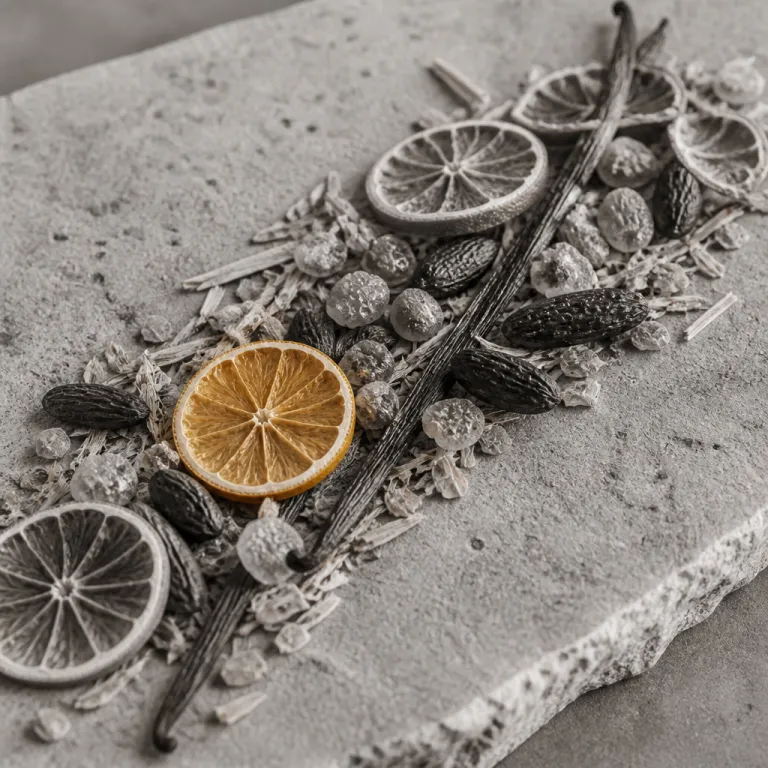
The phrase “guerlinade Guerlain perfumery DNA” describes a recurring base accord that links distant creations like a secret signature. This Guerlinade accord is not a single fixed recipe but a flexible structure built around bergamot, vanilla, tonka bean, orris, jasmine, and often a warm amber glow that makes many Guerlain fragrances feel like relatives. Once you train your nose on this classic pattern, you start to sense it in perfumes as different as Jicky, Shalimar, Samsara, Habit Rouge, and Heure Bleue.
At its core, the Guerlinade is a sweet yet refined balance where powdery facets of orris and floral notes meet the balsamic depth of coumarin and vanillin Jicky style materials. That balance creates a floral powdery trail that feels both intimate and expansive, like a silk scarf scented with jasmine sandalwood and dusted with powder from an old rouge compact. The result is a warm and slightly sweet floral impression that lingers on skin long after the brighter top notes of any given fragrance have faded.
Think of the Guerlinade accord as the house Guerlain habit, the olfactory habit that shapes how their perfume bottles smell from base to drydown. Whether you are smelling a crisp eau de Cologne style composition or a dense amber perfume, that same DNA often peeks through in both singular perfumes and broader Guerlain fragrances collections. For collectors who love classic French perfumery, learning to recognize this Guerlinade makes the entire guerlain catalogue feel legible, coherent, and quietly guerlain beautiful.
From Jicky to Shalimar to Samsara: how the DNA evolved
The story of Guerlinade begins with early experiments like Jicky, where vanillin Jicky style sweetness met aromatic herbs and a daring animalic base. Over time, perfumers such as Jacques Guerlain and later Jean Paul Guerlain refined that accord, folding in more pronounced vanilla, tonka bean, and orris to create a warmer, more enveloping signature that still felt impeccably classic. Each generation of the house Guerlain has treated this structure less as a museum piece and more as a living language.
In Guerlain Shalimar, the Guerlinade accord becomes a grand oriental gesture, where bergamot flashes over a deep vanilla and amber base that feels almost edible yet never cloying. Samsara pushes the jasmine sandalwood axis, wrapping the familiar sweet floral and powdery tones of the Guerlinade in a dense, meditative woodiness that clings to skin for hours. Heure Bleue, by contrast, leans into floral powdery melancholy, where orris, heliotrope, and a soft amber glow turn the Guerlinade into a twilight haze rather than a blazing spotlight.
Even Habit Rouge, often framed as a masculine classic, carries this DNA, pairing citrus and leather with a subtly sweet Guerlinade accord that softens the edges. When you compare these perfumes side by side, the shared accord becomes obvious, like hearing the same melody played on different instruments in both singular perfume and broader perfumes families. For anyone who loves to analyze fragrance structure, this continuity is what makes guerlain feel like a true maison rather than just a logo on a box, and it is why the phrase “guerlinade Guerlain perfumery DNA” has real analytical value for connoisseurs who also enjoy complex chypre compositions such as modern chypre style fragrances.
Invisible architecture: how Guerlinade shapes modern collections
When people speak about the house Guerlain today, they often focus on bottle redesigns or limited editions and forget the quiet persistence of the Guerlinade accord. Yet even in lighter formats such as eau de Cologne inspired lines, that same warm, slightly sweet, powdery base often hums beneath the citrus and herbs. This is where the phrase “guerlinade Guerlain perfumery DNA” earns its keep, because it explains why a fresh cologne and a dense amber perfume can still feel like cousins.
Consider the fabric inspired Les Eaux collection, where names like Eau de Cashmere, Eau de Lingerie, Eau de Coton, Eau de Popeline, and Eau de Tulle suggest textures rather than traditional note pyramids. These perfumes may wear like veils, but many still carry a soft floral powdery and sweet floral whisper of Guerlinade, especially in the way vanilla, tonka bean, and orris are used to create a second skin effect. Even when the compositions lean cleaner or more transparent, the underlying accord keeps them anchored to the guerlain habit of sensual, skin like warmth.
For collectors who also enjoy more direct musky or tobacco driven scents, comparing these Guerlain fragrances with something like a musk focused cologne can sharpen your sense of this DNA, especially if you test them alongside a classic musk such as a traditional musk cologne for women. You will notice that while the musk leans linear, the Guerlinade accord in Guerlain perfumes tends to evolve, revealing powder, amber, and vanilla facets over several hours. That slow unfurling is part of what makes guerlain beautiful to those who love to track a perfume from first spray to final trace.
Why a house signature still matters in a crowded market
In an era where many brands outsource creative direction and share perfumers across multiple maisons, a clear house signature like the Guerlinade accord feels almost radical. The phrase “guerlinade Guerlain perfumery DNA” signals that guerlain has chosen continuity over constant reinvention, even while adapting to new regulations and raw material constraints. That choice gives their perfumes a sense of identity that many contemporary launches lack.
When every new fragrance chases the same sweet gourmand trend, the warm, powdery, floral powdery trail of Guerlinade stands out as a different kind of sweetness. Here, vanilla and tonka bean are not just dessert notes but structural pillars, woven with orris, jasmine, and amber to create a complex accord that feels both intimate and urbane. This is sweetness as habit, as rouge on the lips and powder on the collar, not as candy in a mall.
For collectors who enjoy comparing perfume bottles across houses, Guerlain fragrances often feel more like chapters in a novel than disconnected short stories. You can trace how Jicky, Guerlain Shalimar, Samsara, Habit Rouge, and Heure Bleue each reinterpret the same Guerlinade accord for different moods, genders, and eras. That sense of narrative is what keeps people in love with the house Guerlain long after the first infatuation with a single perfume fades, even as they explore other warm tobacco or oud focused creations such as spiced vanilla and sweet tobacco colognes.
Training your nose: how to recognize Guerlinade on skin
The most effective way to understand the Guerlinade accord is to smell it across time, on your own skin, in different Guerlain perfumes. Start with a classic like Guerlain Shalimar on one wrist and Habit Rouge on the other, then pay attention to the drydown several hours after spraying, when the brighter notes have faded. You will likely notice a shared warm, sweet, slightly powdery base where vanilla, tonka bean, orris, and amber form a soft halo.
Next, compare a floral leaning composition such as Heure Bleue or Samsara with a fresher eau de Cologne style Guerlain fragrance, again focusing on the final stages rather than the opening. Even when the top notes differ wildly, the same floral powdery and sweet floral signature often emerges, like the scent of jasmine sandalwood dusted with powder from a vintage rouge compact. Over time, this habit of attentive smelling turns the abstract idea of “guerlinade Guerlain perfumery DNA” into something you can recognize instantly, the way you might recognize a friend’s voice in a crowded room.
Collectors sometimes speak of guerlain beautiful as a specific feeling rather than a single note, a blend of nostalgia, elegance, and quiet sensuality. That feeling is anchored in the Guerlinade accord, which has been shaped by perfumers such as Jacques Guerlain, Jean Paul Guerlain, and the broader Guerlain family, including figures like Paul Guerlain who helped build the house identity. Once you can pick out the coumarin vanillin glow, the orris powder, and the lingering amber warmth in both singular perfume and broader perfumes lines, you will understand why this invisible signature has shaped what many people think French perfumery should smell like.
FAQ
What exactly is the Guerlinade accord in Guerlain perfumes ?
The Guerlinade accord is a recurring base structure used across many Guerlain fragrances, built around vanilla, tonka bean, orris, jasmine, and often an amber warmth. It creates a sweet, powdery, floral impression that links perfumes such as Jicky, Shalimar, Samsara, Habit Rouge, and Heure Bleue. Rather than a single fixed formula, it is a flexible perfumery language that gives the house Guerlain its recognizable DNA.
How can I train my nose to recognize the Guerlinade on skin ?
The most practical method is to test several Guerlain perfumes side by side and focus on the drydown after a few hours. Compare classics like Guerlain Shalimar, Habit Rouge, and Samsara, and look for the shared warm, sweet, powdery base where vanilla, tonka bean, orris, and amber blend with soft floral notes. Over time, this repeated comparison makes the “guerlinade Guerlain perfumery DNA” feel as recognizable as a familiar voice.
Does the Guerlinade appear in lighter eau de Cologne style fragrances ?
Yes, many Guerlain eau de Cologne inspired creations still carry a softened version of the Guerlinade accord beneath their citrus and herbal top notes. The base may be more transparent, but you can often detect a gentle floral powdery and sweet floral warmth as the fragrance dries down. This continuity helps even the freshest Guerlain fragrances feel connected to the house’s classic perfume heritage.
Why does a house signature like Guerlinade matter for collectors ?
A clear house signature such as the Guerlinade accord gives structure and coherence to a collection, turning individual perfume bottles into chapters of a larger story. For collectors, this makes exploring Guerlain fragrances more rewarding, because each new perfume offers a different angle on the same underlying DNA. It also distinguishes guerlain from brands that follow every trend without maintaining a consistent olfactory identity.
Is the Guerlinade only about sweet and powdery notes, or is it more complex ?
While sweetness and powder are central, the Guerlinade accord is more complex than just a sweet or powdery base. It balances vanilla and tonka bean with orris, jasmine, amber, and sometimes subtle woody or balsamic nuances, creating a warm yet refined structure. This complexity allows the “guerlinade Guerlain perfumery DNA” to adapt to very different perfumes, from airy florals to dense orientals, without losing its recognizable character.
Sources
Fragrances of the World (Michael Edwards)
Perfumes: The A-Z Guide (Luca Turin & Tania Sanchez)
Osmothèque archives and publications