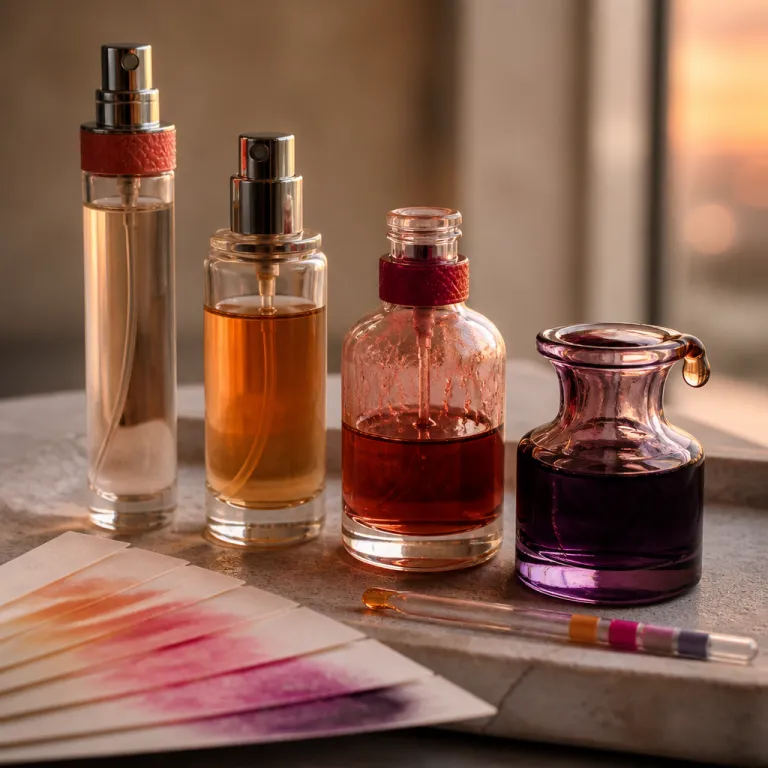
Reading the label: what perfume concentration difference really means
When you pick up a perfume bottle and see eau de toilette, eau de parfum or extrait, you are looking at a quiet code about strength and texture. That code describes the perfume concentration difference, meaning the percentage of fragrance oil dissolved in alcohol and sometimes water, and it shapes how the scent behaves on your skin. Understanding these concentrations turns a confusing wall of fragrances into a clear wardrobe of scents for every day and every mood.
On the lighter end, an eau de cologne usually carries around 2 to 5 percent fragrance oil concentration, while an eau de toilette typically sits between 5 and 15 percent oil in the overall concentration perfume blend. These figures reflect the working ranges described in consumer training materials from the Fragrance Foundation and in public FAQs from major houses such as Guerlain and Chanel, as well as in introductory perfumery textbooks used at schools like ISIPCA. Move up to an eau de parfum and you reach roughly 15 to 20 percent perfume oil, and then parfum or extrait parfum can climb from about 20 up to 40 percent oil concentration for a dense, long lasting scent. These ranges explain why some perfumes feel like a subtle scent cloud for a few hours, while others cling to your skin for longevity hours that stretch from day into night.
Labels such as eau toilette, eau parfum, parfum eau or extrait parfum are not marketing poetry; they are technical signals about how much fragrant material is in the juice. A higher concentration usually means richer notes, more lasting power and fewer sprays needed, yet the real perfume concentration difference also depends on which raw materials are used and how they are blended. Once you see concentrations as part of a spectrum rather than a hierarchy, you can choose fragrances that match hot weather, office life, special occasions or relaxed daily wear without guessing.
From eau de cologne to extrait: how each concentration wears in real life
Think of the concentration spectrum as a wardrobe rail, from linen shirts to cashmere coats, each suited to a different day and different skin. Eau de cologne, with its low concentration of fragrance oil, gives a bright, fleeting scent that feels perfect in hot weather when you want citrus notes and herbal freshness to sparkle, then vanish gracefully. You might spray an eau cologne generously every few hours, enjoying its light fragrances as a refreshing gesture rather than a statement piece.
Eau de toilette, often labelled as toilette EDT or simply toilette, usually offers 5 to 15 percent perfume oil, which means more lasting power than cologne but still an airy, breathable scent. Many classic perfumes exist as both eau toilette and eau parfum versions, with the EDT emphasising top notes and a subtle scent trail, while the EDP leans into deeper base notes and higher oil concentration for longer longevity hours. In practice, this often translates to around 3 to 5 hours of noticeable presence for an eau de toilette on moisturised skin, versus 6 to 8 hours for a well constructed eau de parfum under similar conditions, as reported in wear tests and consumer guidance published by brands such as Dior and Lancôme.
At the denser end, parfum EDP and extrait parfum wrap the skin in a concentrated veil of scent that can last many hours with just one or two sprays. These higher concentrations often showcase rich woods, resins and musks, making them perfect for cool evenings or intimate settings where the fragrance develops slowly and stays close. If you enjoy detailed note breakdowns and technical descriptions of accords, you will notice how extrait and parfum formats often highlight the most luxurious materials in a composition and are frequently discussed in expert resources from the Fragrance Foundation and professional perfumery schools.
Why concentration is not destiny: ingredients, skin and the myth of guaranteed longevity
Many fragrance lovers assume that a higher concentration automatically means a stronger scent and longer lasting wear, yet real life testing tells a more nuanced story. Longevity depends not only on the percentage of perfume oil but also on which molecules carry the scent, how heavy they are and how they interact with your skin chemistry. A smoky incense eau de toilette can sometimes outlast a delicate floral eau de parfum, simply because resins and woods cling to skin more stubbornly than airy petals.
Perfumers build fragrances like architectural structures, balancing top, heart and base notes so that the perfume concentration difference supports the design rather than overpowering it. Citrus notes and green accords shine in lighter concentrations such as eau fraiche or a breezy toilette eau, while dense amber notes and vanilla often feel more satisfying in eau parfum or parfum eau formats. Your own skin type, from dry to oily, also changes the story; oilier skin tends to hold scents longer, while very dry skin may cause even high concentrations to fade faster unless you moisturise first.
Climate adds another layer, because hot weather amplifies scent diffusion and can make a heavy extrait parfum feel overwhelming, whereas the same concentration perfume in winter feels cocooning and elegant. This is why some perfume oils and richer fragrances are best reserved for evenings or cooler days, while lighter eau cologne or eau fraiche versions shine under the sun. If you enjoy complex orientals or red tea inspired blends, you will notice how the same notes can feel either airy or dense depending on the chosen concentration and on whether the formula was designed as EDT, EDP or parfum.
EDT versus EDP versus extrait: when lighter or stronger actually makes sense
Choosing between eau de toilette, eau de parfum and extrait is less about status and more about context, comfort and how you like your scent to behave. An EDT with moderate perfume concentration often suits daily routines, from commuting to open plan offices, because its lighter trail respects shared spaces while still giving you a personal cloud of fragrance. You can spray more generously, enjoy the first bright notes and then reapply after a few hours without overwhelming anyone.
EDP formats, sometimes labelled parfum EDP or eau parfum, usually carry higher oil concentration and therefore feel richer on the skin, with more emphasis on heart and base notes. They work beautifully for day to night transitions, date evenings or special occasions when you want your perfumes to project a little further and last longer without constant top ups. Many modern fragrances are released only as EDP because this concentration perfume balance offers both impact and versatility for most scent lovers.
Extrait and pure parfum sit at the top of the concentration ladder, offering dense, long lasting scents that cling to pulse points for many hours. These parfum oils and extrait parfum blends are ideal when you want intimacy rather than volume, since a tiny dab can create a subtle scent aura that feels almost like second skin. If you are building a curated wardrobe of fragrances in different concentrations, travel friendly formats and medium sized bottles make it easier to experiment with EDT, EDP and extrait without committing to oversized flacons.
Price, value and the real cost per wear of different concentrations
Sticker shock often hits hardest when you compare a small bottle of parfum or extrait to a larger, cheaper eau de toilette on the same shelf. The parfum looks expensive at first glance, yet the perfume concentration difference means you usually need far fewer sprays, so the cost per wear can quietly drop below that of a budget friendly toilette EDT you burn through in weeks. Thinking in terms of price per day of use, rather than millilitres alone, gives a clearer picture of value.
A 30 millilitre extrait parfum with 30 percent fragrance oil might last you an entire season of evening outings, because one or two drops on skin deliver long lasting scent for many hours. By contrast, a 100 millilitre eau toilette with 8 percent oil concentration could require eight to ten sprays per day, especially in cold weather when diffusion is weaker and notes stay closer to the body. Over time, that generous spraying habit can empty the bottle quickly, making the apparently cheaper option less economical than a denser parfum eau or concentrated perfume oil.
Value also hides in how you use your fragrances, since layering a subtle scent body lotion with a matching EDP can extend longevity without extra sprays. Some fragrance oil roll ons or perfume oils are perfect for topping up an EDT during the day, stretching both bottles while maintaining a coherent scent profile. When you evaluate perfumes, consider not only the listed concentration but also your spraying style, your climate and how often you reach for that particular bottle.
Blending techniques: how perfumers shape concentration into character
Behind every label that reads eau de toilette or eau de parfum lies a series of blending decisions that determine how the scent unfolds on your skin. Perfumers work with accords rather than isolated notes, adjusting the perfume concentration difference so that citrus, florals, woods and musks form a coherent story at a chosen strength. A skilled nose might design one formula for EDT that emphasises sparkling top notes, then tweak the same fragrance into an EDP where the base becomes more prominent and lasting.
In lighter concentrations such as eau fraiche or a breezy eau cologne, the perfumer often leans on volatile materials that give an immediate, refreshing hit of scent. These fragrances may sacrifice some longevity hours, yet they gain in clarity and transparency, making them ideal for hot weather or for people who prefer subtle scent trails. When the brief calls for a long lasting, intimate perfume, the perfumer increases the proportion of heavier molecules and may shift the balance toward resins, woods and musks that cling to skin.
Oil based formats such as perfume oils or concentrated fragrance oil blends change the game again, because the absence of high proof alcohol slows evaporation and softens projection. A roll on perfume oil with moderate concentration perfume levels can feel closer to the body than a spray EDP, yet it may outlast it in terms of sheer duration on the skin. Understanding these blending techniques helps you read between the lines of labels like toilette eau, parfum EDP or extrait parfum, so you can choose the format that matches both your taste and your lifestyle.
Key figures about perfume concentration and wear time
- Typical eau de cologne concentrations range from about 2 to 5 percent fragrance oil, which usually translates to 1 to 3 hours of noticeable scent on most skin types according to major fragrance houses. These values align with the ranges summarised in training materials from the Fragrance Foundation and in public FAQs from brands such as Hermès.
- Eau de toilette concentrations generally sit between 5 and 15 percent perfume oil, and many brands report average wear times of 3 to 5 hours in temperate climates when applied to moisturised skin. These figures are consistent with the consumer guidance published by companies like Chanel and Guerlain.
- Eau de parfum formats commonly contain 15 to 20 percent fragrance oil, with consumer testing by several luxury maisons indicating 6 to 8 hours of lasting presence for well constructed formulas. These internal tests, often cited in brand press kits and educational brochures, are designed to reflect realistic daily use.
- Parfum and extrait concentrations can reach 20 to 40 percent perfume oil, and high quality compositions in this range often remain detectable on fabric and pulse points for 12 hours or more. Professional perfumery textbooks, such as those used in ISIPCA training programmes, describe similar performance for dense, base heavy blends.
- Comparative evaluations by perfumery schools and brand training teams show that heavier base note materials such as woods, ambers and musks can increase perceived longevity by up to roughly one third compared with citrus dominant scents at the same concentration level.
FAQ: your questions about EDT, EDP, parfum and extrait
Does a higher concentration always last longer on my skin ?
A higher concentration such as eau de parfum or extrait usually offers better longevity, but it is not a guarantee because ingredients and skin chemistry matter just as much. Heavy base notes like woods and resins cling longer than light citrus notes, even at the same percentage of perfume oil. Your skin type, climate and application method all influence how long a scent remains noticeable.
How should I choose between eau de toilette and eau de parfum for daily wear ?
If you work in close quarters or prefer a subtle scent, an eau de toilette is often the safer daily choice because it projects less and invites more generous spraying. Eau de parfum suits you if you want fewer reapplications and enjoy a richer, more enveloping trail throughout the day. Many fragrance lovers keep both formats, using EDT for daytime and EDP for evenings or cooler weather.
Is parfum or extrait worth the higher price ?
Parfum and extrait can be worth the premium if you value depth, intimacy and long lasting wear from just a drop or two. Because you use less per application, the cost per wear can be lower than a cheaper EDT that requires frequent top ups. These concentrated formats are especially appealing for special occasions or for signature scents you reach for often.
Why does my friend’s EDT last longer than my EDP from another brand ?
Different formulas use different raw materials, and some EDT compositions rely heavily on long lived base notes that naturally extend wear time. An EDP built around delicate florals or airy musks may feel softer and fade faster despite the higher concentration. Labels like EDT and EDP are guidelines, not strict promises, so always test on your own skin before judging longevity.
Can I layer different concentrations of the same fragrance ?
Layering an eau de toilette with an eau de parfum or matching body products is a practical way to customise intensity and extend longevity. Many houses design their ranges so that EDT, EDP and ancillary products share the same core accord and blend smoothly. Apply the lighter format more broadly, then add a touch of the stronger concentration to pulse points for extra depth.