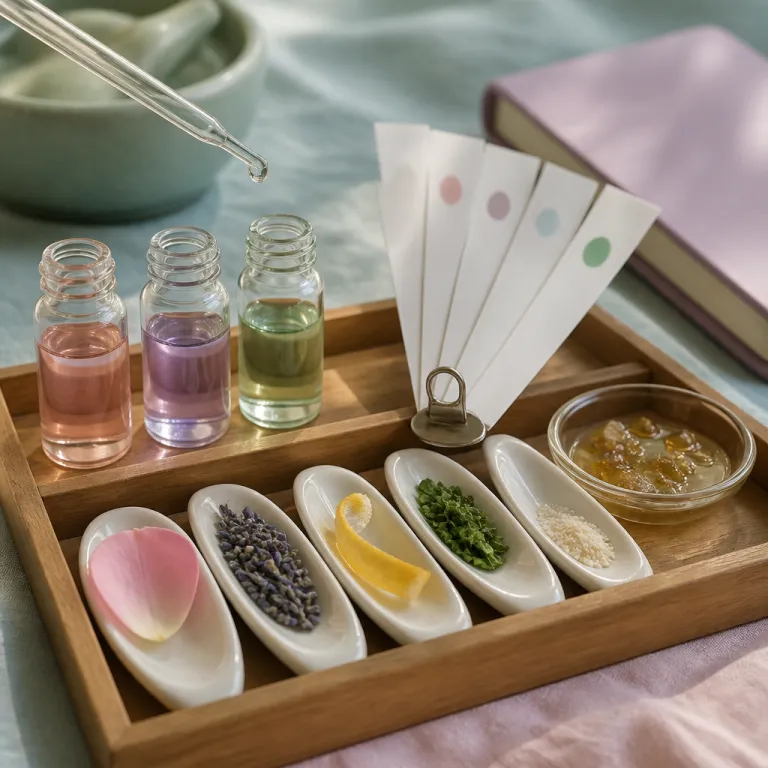
The training pipeline: from raw nose to professional olfactory system
Perfumers are not born with a perfect sense of smell ; they build it through relentless training that turns a vague odor into a precise reference. In schools such as ISIPCA in Versailles, the Givaudan Perfumery School in Argenteuil, and the IFF Perfumery School in Grasse, students spend years turning fleeting sensory impressions into stable scent memories that the brain can retrieve on command. This is where the real story of how perfumers train smell memory begins, with a strict routine that shapes both cognitive function and creative instinct.
On day one, participants are handed blotters dipped in single raw materials and asked to name nothing, only to smell and write ; the goal is to let the olfactory system speak before language interferes. Each odor is logged in a notebook with visual cues, emotional reactions, and any induced memories, because linking smell to images and feelings strengthens olfactory memory and supports long term memory health. Over months, what starts as chaos of unfamiliar odors becomes an ordered internal system of scent, where people smell linalool, hedione, or Iso E Super and can recall their exact profile without hesitation.
By the second or third year, the training intensity increases and students may smell 50 to 80 ingredients per day, carefully spaced to avoid smell loss and sensory fatigue. They drill accords the way a pianist drills scales, repeating citrus, floral, and woody structures until scent memory and muscle memory feel almost identical in the brain. This disciplined approach to olfactory function is why a fully trained perfumer can hold 1,500 to 3,000 ingredients in active smell memory without tipping into memory loss or mental health strain.
Inside the perfumer’s day: calibration, fatigue, and managing smell loss
A working perfumer starts the day early, when the sense of smell is sharpest and the olfactory bulb is rested. Before touching any formula, they perform calibration exercises that reset the olfactory system, often smelling a few known reference materials on blotters and sometimes their own clean skin to align scent memory with reality. This ritual is central to how perfumers train smell memory over the long term, because it keeps the brain honest about what an odor truly is, not what yesterday’s work suggested.
Smell induced fatigue arrives quickly ; after 15 to 20 minutes of intense olfaction, the sensory system begins to blur nuances and certain odors vanish from awareness. Perfumers respect this biological limit and work in short bursts, stepping away from the organ, drinking water, or walking outside to prevent temporary smell loss that could distort olfactory function and lead to poor decisions. Many report transient anosmia to specific molecules, a local loss of odor perception that can last hours, so they rotate tasks, switching from heavy musks to airy citrus or from formula evaluation to paperwork to protect both memory health and mental health.
Even in this highly trained context, the link between smell and cognitive function remains fragile, especially when projects demand constant exposure to powerful materials such as oud, coffee, or smoky birch tar. When a perfumer evaluates a dense coffee oud composition, similar in spirit to the intensity discussed in analyses of a high priced coffee oud fragrance, they schedule the session strategically, often in the morning, to avoid overloading scent memories later in the day. This careful pacing is not indulgence but a professional safeguard against cumulative odor overload, which can accelerate memory loss and undermine the subtle cognitive effects that make a great nose reliable.
Building an internal scent library: synesthetic tricks and induced memories
The core of how perfumers train smell memory lies in the way they encode each scent as a multi layered experience rather than a flat odor. When a student at a university affiliated perfumery program smells galbanum for the first time, they might write “crushed green stems under a cold metal railing” and sketch a quick visual scene, because this sensory layering helps the brain store olfactory memory alongside images and sounds. Over time, these induced memories become a private language, allowing the perfumer to navigate thousands of odors as easily as a reader navigates a bookshelf.
Teachers encourage participants to anchor every new scent with at least three hooks ; a visual image, a tactile sensation, and an emotional tone, which together create robust scent memories that resist loss. A smoky guaiac wood accord might be “blue grey velvet, warm stone, late evening by a dying fire”, and this poetic shorthand becomes a precise technical tool that strengthens both olfactory function and cognitive function. This is why many perfumers keep sketchbooks rather than simple lists, because drawing the link between smell and shape or color deepens the neural pathways that protect memory health over the long term.
For fragrance lovers, structured sampling can echo this professional training, especially when using curated sets that encourage comparison and note recognition. Working through well chosen discovery sets for building a scent wardrobe, you can practice the same method ; smell, write, sketch, and revisit, turning casual memories into stable scent memory. This approach transforms everyday olfaction into a deliberate study, where people smell not just for pleasure but to cultivate an internal archive of odors that will keep rewarding them for years.
Olfactory memory, the brain, and what science says about health
Perfumers work at the crossroads of art and neuroscience, because the olfactory bulb connects directly to brain regions that govern memories and emotion. Research in cognitive science has shown that olfactory memory is unusually durable, with certain scent memories remaining vivid even when visual details fade, which explains why a single odor can summon a childhood kitchen more clearly than any photograph. This tight link between smell and memory health is one reason scientists study olfaction when they investigate early signs of neurological change.
Several university led studies have explored how changes in sense of smell can signal broader cognitive effects, especially in relation to conditions such as Alzheimer disease. While perfumers are not immune to memory loss, their constant training may help maintain cognitive function by keeping the olfactory system active and engaged in complex discrimination tasks. Some research projects have recruited participants from fragrance and flavor industries to examine whether intensive olfactory training influences long term memory health, though results remain nuanced and never reduce such training to a simple cure.
What is clear is that smell loss often correlates with shifts in mental health, because losing access to scent memories can feel like losing a part of one’s identity. For professionals whose life revolves around how perfumers train smell memory, any persistent loss of odor perception is taken seriously and usually prompts medical consultation rather than denial. In this context, the daily discipline of smelling, naming, and revisiting odors is not only a creative practice but also a quiet investment in the resilience of the brain’s sensory system.
Why the human nose still matters in an AI era
As fragrance houses integrate data driven tools, many readers ask whether algorithms will replace the human nose in deciding how perfumers train smell memory. AI can analyse molecular structures, predict volatility curves, and suggest combinations that might yield a particular odor profile, but it cannot yet feel the emotional weight of scent memories or judge whether a drydown feels intimate or abrasive on real skin. The olfactory system of a perfumer remains a living instrument, tuned by years of training and by countless induced memories that no machine can fully replicate.
In practice, AI functions as an assistant that proposes options while the perfumer curates, edits, and rejects, guided by their own olfactory memory and by how people smell the final result in real life. When a maison builds a modern fragrance wardrobe, as discussed in reflections on a contemporary fragrance wardrobe at home, the creative director still relies on human noses to ensure each scent occupies a distinct emotional space. Machines can map the chemical link between smell and structure, but only a trained perfumer can decide whether a new accord truly earns a place in someone’s long term scent memories.
The scarcity of master perfumers, often estimated in the low hundreds worldwide, reflects how demanding this path is for both brain and body. Years of disciplined olfaction, constant exposure to intense odors, and the psychological weight of shaping other people’s memories create a genuine bottleneck that no shortcut can bypass. For collectors and connoisseurs, understanding how perfumers train smell memory adds another layer of appreciation, revealing that what lingers on the wrist at midnight is not just a formula but a lifetime of carefully honed sensory experience.
Practical ways fragrance lovers can train their own scent memory
You may never sit at the organ at ISIPCA, but you can still borrow professional methods to refine your own sense of smell at home. Start by choosing a small set of perfumes or raw materials and smell them regularly on blotters and skin, always writing a few lines that capture the odor, the visual images it evokes, and any memories that surface. This simple ritual mirrors how perfumers train smell memory, turning casual olfaction into a structured practice that strengthens both sensory awareness and cognitive function.
Create a personal “scent journal” where each page is devoted to one fragrance, with space for top, heart, and base impressions, because this layout encourages you to track how the olfactory system perceives changes over time. Note when certain odors vanish or feel muted, as this can reveal temporary smell loss or fatigue and help you adjust your routine to protect memory health and mental health. Over months, you will notice that your scent memories become more precise, and that you can recall an odor’s character even before you lift the blotter to your nose.
Finally, treat your collection as a living study rather than a static display, rotating what you wear to keep the brain engaged and to avoid over saturating your sense of smell with a single signature. When you feel overwhelmed, give your olfactory bulb a rest instead of forcing more testing, because respecting the limits of your sensory system is part of sustainable training. In time, you will find that your own smell memory, while not as vast as a master perfumer’s, becomes rich enough to navigate complex wardrobes with ease and to savour every new bottle with informed, confident pleasure.
FAQ
How many ingredients can a trained perfumer realistically remember by smell ?
Most fully trained perfumers can reliably recognise between 1,500 and 3,000 individual raw materials by smell, including naturals and aroma chemicals. This capacity depends on years of daily olfactory training, where each odor is linked to visual images, textures, and personal memories to reinforce olfactory memory. The number is not fixed, but the combination of practice and cognitive discipline allows these noses to access a vast internal library of scent memories on demand.
How long does it take to develop professional level olfactory memory ?
Becoming a professional perfumer usually requires several years of formal study followed by a long apprenticeship inside a fragrance house. During this period, students and junior perfumers smell hundreds of odors repeatedly, building both short term and long term smell memory through structured exercises. Even after reaching senior status, they continue daily training to maintain olfactory function and prevent subtle forms of memory loss related to sensory fatigue.
Can regular fragrance lovers improve their own scent memory meaningfully ?
Yes, fragrance enthusiasts can significantly improve their scent memory by adopting simplified versions of professional routines. Regular, mindful smelling sessions, note taking, and comparing similar scents train the brain to distinguish fine differences in odor and to store more detailed scent memories. Over time, this practice sharpens the sense of smell and makes exploring new perfumes more rewarding and less overwhelming.
Does olfactory training protect against Alzheimer disease or other cognitive disorders ?
Current research suggests that maintaining active olfactory function may support overall cognitive health, but it does not prove that smell training can prevent Alzheimer disease or other conditions. Scientists use changes in sense of smell as one of several indicators when studying cognitive decline, because the olfactory bulb is closely linked to memory related brain regions. For now, olfactory training should be seen as a potentially beneficial mental exercise, not as a medical treatment.
Why do some people experience sudden smell loss, and should perfume lovers worry ?
Sudden smell loss can result from infections, nasal issues, head injuries, or exposure to very strong odors, and it sometimes resolves on its own. Perfumers and fragrance lovers alike should take persistent changes in smell seriously, because they affect quality of life and may signal broader health issues. Consulting a medical professional is the best way to assess the cause and to discuss whether guided olfactory training could help support recovery.