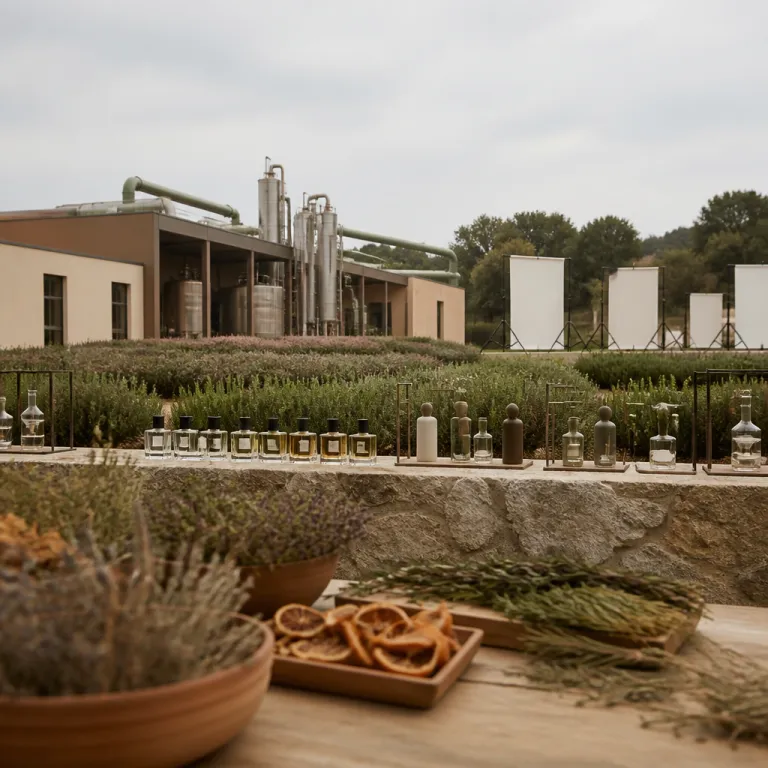

From fragrance lab to billboard: how evolving pipelines shape imagery
Every iconic perfume ad begins long before the camera starts rolling. As the modern development pipeline in many fragrance houses refines how formulas move from lab bench to global launch, it quietly dictates which stories can credibly appear on screen and which emotions a campaign may dare to promise. When you see a model stride through mist on a Paris bridge, you are also seeing years of olfactory research, regulatory checks, and market testing condensed into a single frame.
Historically, creative directors often worked in parallel with perfumers, but today’s integrated creation pipeline forces much tighter collaboration between scent development, consumer insight teams, and advertising agencies. This means that mood boards, casting choices, and even music are now informed by data on how trial panels describe accords such as solar florals, mineral musks, or smoky resins, rather than by intuition alone. The result is a new generation of campaigns where the visual narrative mirrors the actual structure of the fragrance pyramid with unusual precision, instead of treating the liquid and the imagery as separate worlds.
For fragrance lovers, this evolution in end‑to‑end fragrance workflows has a tangible impact on how believable an ad feels. When a woody amber is marketed with images of windswept cedar forests and glowing city lights, the underlying formula has usually been stress tested to ensure its sillage and longevity match that promise in real life. The closer the internal process brings technical performance and emotional storytelling together, the more an ad becomes a faithful translation of the liquid in the bottle rather than a distant fantasy, and the easier it is for wearers to connect what they see with what they actually smell.
From Chanel N°5 to the 90s revolution: pipelines behind cultural moments
Some of the most famous perfume campaigns, such as the Marilyn Monroe association with Chanel N°5, were born in an era when the development pipeline was comparatively simple. A perfumer crafted a formula, a house approved it, and marketing wrapped a glamorous story around the finished juice with minimal interference from compliance teams or global focus groups. That lean structure allowed bold, sometimes risky narratives to reach the public quickly, embedding scents in cultural memory almost by accident.
As the industry matured, a more staged, versioned model of product development emerged, especially visible in the transformative perfume ads of the 90s. Brands like Calvin Klein with CK One or Jean Paul Gaultier with Le Male relied on formalized steps that linked formula tweaks, bottle design, and casting decisions to specific consumer segments identified in pre‑launch research. Analysing how 90s perfume ads changed the fragrance world, as explored in detailed trade coverage of that decade’s “revolution of scent,” shows how disciplined project management, with clear briefs and phased approvals, can still produce rebellious, culture‑shifting imagery.
Today, heritage houses blend that historical daring with the more complex global launch frameworks required by international distribution and stricter regulation. When Dior revisits J’adore with Charlize Theron or Guerlain reimagines Shalimar, the campaigns reference decades of visual codes while passing through multi‑stage approvals that would have been unthinkable in the mid‑twentieth century. In interviews reported by industry publications, creative directors often describe these relaunches as “walking a tightrope between legacy and novelty,” and the magic for fragrance enthusiasts lies in watching how these brands preserve the soul of their legends while navigating a far more intricate route from first accord to final film.
How modern pipelines engineer desire in iconic ad narratives
Contemporary fragrance campaigns rarely rely on a single striking image; they unfold as serialized stories across film, print, and social media. Behind this narrative richness sits a structured campaign pipeline that maps each chapter of the launch to specific milestones in the product’s life cycle, from pre‑launch teasers to post‑launch loyalty pushes. The same jasmine or vetiver accord that anchors the formula becomes a recurring visual motif, guiding the viewer through a carefully orchestrated emotional arc.
In practice, this means creative teams now receive far more granular input from evaluators and consumer insight specialists during the concept‑to‑market stages. If early testing shows that wearers describe a scent as “skin‑like” or “second‑skin musk,” the ad may lean into intimate close‑ups and quiet domestic scenes rather than grand cityscapes or fantasy sequences. When a fragrance is perceived as “armour” or “power suit in a bottle,” the internal roadmap often steers the campaign toward bolder, more architectural visuals that echo that psychological effect.
Analyses of how iconic fragrance ads shaped our desires, including work presented in in‑depth industry essays on the “scent of success,” show that these choices are rarely accidental. A test‑and‑learn approach allows brands to explore which images best translate olfactory impressions like freshness, sensuality, or mystery into instantly legible symbols. For perfume lovers, understanding this machinery does not diminish the romance; it simply reveals how carefully calibrated each frame is to echo the trail that lingers on your skin.
Regulation, allergens, and the new realism in perfume storytelling
Regulatory pressure has become one of the most decisive forces reshaping fragrance pipelines and, by extension, advertising aesthetics. As contemporary creation processes integrate toxicology assessments, allergen disclosure requirements, and sustainability audits earlier in development, the room for purely fantastical narratives has narrowed. Campaigns now tend to anchor their dreams in more grounded settings, often highlighting craftsmanship, ingredient sourcing, or responsible luxury.
One clear example is the growing focus on allergen transparency in the European Union, where updated labelling rules require brands to list a broader range of potential sensitizers on packaging. Detailed analyses of the expansion of fragrance allergen disclosure under Regulation (EC) No 1223/2009 and related Scientific Committee on Consumer Safety (SCCS) opinions show how these rules influence not only the formula but also the claims a campaign can safely make. When a fragrance positions itself as “clean,” “gentle,” or “for sensitive skin,” that language must now align with the documented composition and the risk assessments embedded in the compliance checkpoints of the development journey.
This shift has encouraged a more documentary style of storytelling, where perfumers, ingredient growers, and even lab technicians appear on screen to explain their craft. For enthusiasts, such realism can be deeply satisfying, because it connects the romance of a misty ad sequence with the concrete reality of bergamot harvests in Calabria or iris butter extraction in Grasse. The regulatory layer woven into the process does not extinguish fantasy; it simply demands that every poetic claim rests on a verifiable, responsibly managed base.
Digital pipelines, AI, and the future of iconic fragrance campaigns
Digitalization has transformed how fragrance houses design, test, and communicate their creations, and advertising has followed suit. A modern, data‑driven pipeline often includes AI‑assisted formula modelling, virtual reality mood boards, and social listening dashboards that track how early leaks or influencer seeding shape public perception. These tools compress feedback loops, allowing brands to adjust both the juice and the campaign narrative almost in real time.
For example, when a brand pilots a new gourmand fragrance in a limited online drop, it can monitor how wearers describe it on social platforms and fragrance forums, then feed those descriptors back into the creative brief. If the community unexpectedly fixates on a toasted hazelnut nuance rather than the intended praline accord, a flexible launch framework makes it possible to pivot the ad’s focus toward that note in subsequent waves. This responsiveness contrasts sharply with the slower, one‑way campaigns of earlier decades, where a television spot remained fixed long after public tastes had shifted.
At the same time, digital tools raise questions about authenticity and over‑optimization, especially for connoisseurs who value idiosyncrasy in both scent and storytelling. The challenge for brands is to use these efficiencies to refine their message without sanding away the quirks that make a campaign unforgettable, like the surreal desert dreamscapes of Yves Saint Laurent’s Opium or the enigmatic city nights of Armani Code. As one senior marketer at a major house put it in a recent trade interview, “the algorithm can suggest what is safe, but the icon is born when we dare to go a little off‑script.” When technology serves the perfume’s character rather than dictating it, the resulting ads can feel both contemporary and timeless.
What fragrance lovers can read between the frames of an ad
For those who adore perfume, understanding the mechanics behind iconic campaigns adds a new layer of appreciation. When you watch a short film for a new extrait or flankers in a beloved line, you can mentally trace how the different stages of development shaped everything from the colour grading to the choice of soundtrack. Each creative decision hints at technical realities such as concentration level, expected longevity, and target occasions of wear.
If a campaign leans heavily on daytime city scenes, light fabrics, and open windows, it often signals a fresher profile with moderate sillage designed for office or casual use. By contrast, candlelit interiors, velvet textures, and slow camera movements usually accompany denser formulas that the brand has positioned for evening, special events, or colder weather. Recognizing these visual codes allows enthusiasts to gauge whether a scent aligns with their wardrobe before ever spraying it on skin.
Over time, you may even notice how certain houses develop signature advertising languages that mirror their olfactory identities, from Hermès’ quiet, contemplative landscapes to Mugler’s high‑drama futurism. These patterns emerge because each brand’s internal decision‑making framework embeds specific priorities, whether that is sustainability, avant‑garde artistry, or mass appeal, and those priorities inevitably surface in the final cut. Reading ads this way turns passive viewing into an active, almost forensic pleasure for anyone deeply invested in fragrance culture.
Key figures shaping fragrance pipelines and iconic campaigns
- According to data cited by the Fragrance Foundation in recent industry briefings on prestige fragrance performance, sales in key markets have posted sustained double‑digit growth over several consecutive quarters, which has pushed brands to formalize development pipelines to handle higher launch volumes without diluting quality.
- Industry surveys from firms such as Circana (formerly NPD Group), including their fragrance category trend reports, indicate that a majority of fragrance purchases are now influenced by digital content, prompting advertisers to design campaigns that function across multiple formats from the earliest planning stages.
- Regulatory bodies in the European Union currently require the labelling of dozens of potential fragrance allergens under Regulation (EC) No 1223/2009, and upcoming expansions based on SCCS opinions have led many houses to integrate compliance checks at two or three separate points in their internal workflows.
- Market research by major beauty conglomerates, as summarized in annual investor presentations and category reviews, shows that campaigns featuring a clear narrative arc, rather than static imagery alone, can significantly increase fragrance brand recall, which explains the growing emphasis on serialized storytelling within structured development pipelines.
- Some large fragrance groups now report internal timelines of roughly 18 to 24 months from initial brief to global launch, with as many as six formal decision gates in their project frameworks to align perfumery, packaging, and advertising, a structure often illustrated in their public sustainability or innovation roadmaps.
FAQ: iconic perfume ads and evolving fragrance pipelines
How does a modern fragrance pipeline influence the style of an ad ?
A modern pipeline links formula development, consumer testing, and creative work, so the way people describe the scent directly shapes the campaign’s visuals, pacing, and messaging. This alignment helps ensure that what you see on screen reflects how the fragrance actually behaves on skin. As workflows become more structured, ads tend to feel more coherent with the perfume’s real character.
Why do so many perfume campaigns now highlight ingredients and sourcing ?
Stricter regulation, sustainability concerns, and consumer demand for transparency have pushed brands to foreground raw materials and production stories. When these topics enter the development brief early, they naturally become central themes in the final campaign. For enthusiasts, this offers a richer understanding of what is in the bottle and where it comes from.
Are digital and social media changing what makes a campaign iconic ?
Yes, because iconic status now often emerges from repeated sharing, remixing, and commentary across platforms rather than from a single television spot. Pipelines are adapting by planning multi‑episode narratives and interactive elements from the outset. This shift rewards campaigns that invite participation while still delivering a strong, memorable central image.
Can regulatory changes really alter the mood of perfume advertising ?
Regulation affects which claims are allowed, how ingredients are framed, and sometimes which materials can be used at all, so it inevitably shapes the emotional tone of campaigns. When a formula is reformulated to meet new standards, the internal roadmap may require a refreshed narrative that better matches the updated scent. The result is often a move toward more realistic, craft‑focused storytelling.
What should fragrance lovers look for when evaluating a new campaign ?
Pay attention to how the visuals suggest concentration, season, and context of wear, and compare that to your experience once you test the scent. Notice whether the story feels aligned with the fragrance’s evolution on your skin or whether it overpromises in ways the formula cannot support. Reading campaigns through the lens of the underlying development process can deepen both your enjoyment and your purchasing decisions.