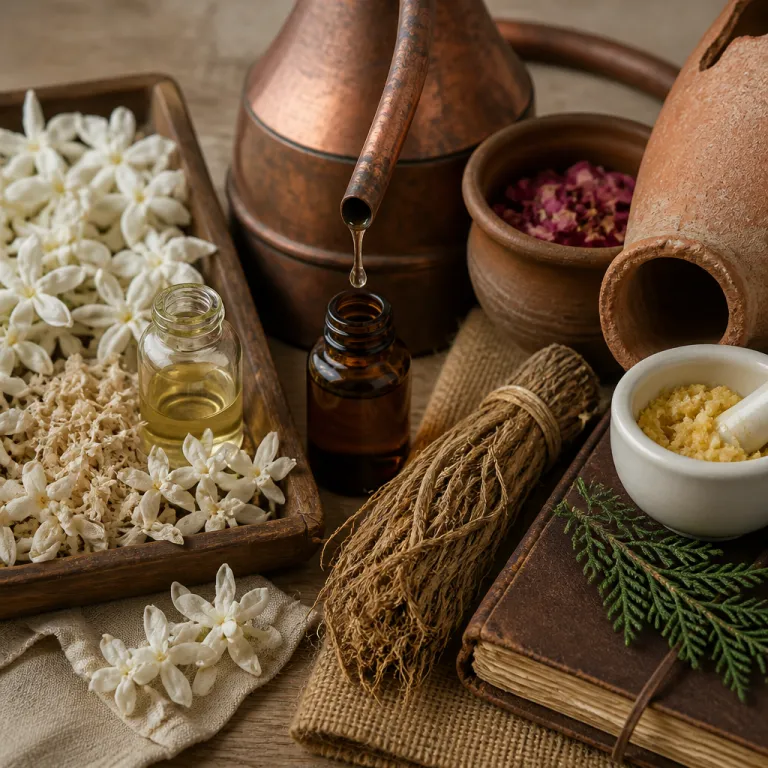
Perfume geography Grasse history and the idea of terroir
The phrase perfume geography Grasse history describes how one small French town quietly rewired global taste. In the hillside town of Grasse, perched above the Côte d’Azur in the Alpes-Maritimes, perfumery grew from a practical craft for scented leather gloves into a full perfume industry that still shapes what you smell in modern bottles. When you spray a delicate floral fragrance built around jasmine or rose, you are often smelling the afterglow of this town Grasse story.
Grasse began as a centre for leather tanning, and the smell of untreated leather was harsh and persistent. To make leather gloves more appealing, artisans started perfume making with local flowers, using early techniques that predated modern industrial production but already hinted at a future perfume capital. Over time, leather tanning moved away while perfumery stayed, and the town transformed from a place of hides and gloves into a landscape of flowers and raw materials for fragrance.
The geography of the Pays de Grasse matters as much as its history. Sheltered by the mountains yet open to sea breezes from the Côte d’Azur, the town offers a microclimate ideal for the cultivation of jasmine, rose, and other fragile flowers. This is why the perfume geography Grasse history is inseparable from agriculture, because the industry here depends on fields of jasmine, tuberose, and jasmine rose that still supply major houses.
When you read that a luxury French perfume uses Grasse jasmine, it usually means Jasminum grandiflorum grown in small plots under strict contracts, often for brands like Chanel or Dior. These flowers are harvested at dawn, when their fragrance is most intense, then rushed to extraction facilities in the town of Grasse to preserve their volatile ingredients. The result is a concentrated material such as jasmine absolue or an absolue from Pays de Grasse, which becomes the beating heart of many floral compositions.
Historically, techniques like cold enfleurage were used in Grasse to capture the scent of delicate flowers that could not withstand heat. In cold enfleurage, petals of jasmine or tuberose were laid on fat-coated glass plates, allowing their fragrance to migrate slowly into the fat before being washed with alcohol to obtain a perfumed extract. While modern production has largely replaced cold enfleurage with solvent extraction, the method remains part of perfume geography Grasse history and still fascinates fragrance lovers who visit local workshops.
Names such as Fragonard, Bruno Court, and Jean Honoré Fragonard are woven into this narrative of Grasse French perfumery. The Fragonard perfumery and the perfume museum in the town offer a curated version of this history, from leather gloves to modern fragrance, while the Bruno Court legacy reminds us that behind every grasse perfume there are families, chemists, and farmers. When you walk through these spaces, the perfume geography Grasse history stops being abstract and becomes a lived, scented archive.
From leather gloves to floral fields: how Grasse became the perfume capital
Long before Grasse was called the perfume capital, it was simply a working town that smelled of hides, smoke, and tannins. The shift began when leather gloves scented with flowers became fashionable at the French court, especially under figures such as Catherine de Médici, who helped turn perfumed leather gloves into symbols of status and hygiene. As demand grew, the town of Grasse leaned into perfume making, and leather slowly ceded centre stage to fragrance.
Leather tanning required strong chemicals and produced odours that clung stubbornly to skin and clothing. To mask these smells, artisans experimented with local flowers and ingredients, gradually refining techniques that would later define the perfume industry in this region. Over time, leather gloves remained as luxury objects, but the real economic engine became the cultivation of flowers and the extraction of their scent for perfumery.
The hills around Grasse filled with fields of jasmine, rose de mai, and jasmine tuberose, each flower chosen for its unique fragrance profile and its ability to thrive in this specific terroir. These flowers were not grown for bouquets but as raw materials, destined to be transformed into absolues and essential oils that travelled from the Pays de Grasse to Paris and beyond. This is the quiet power of perfume geography Grasse history, where a landscape of fields becomes a global olfactory reference.
Today, when brands speak of grasse perfume or highlight Grasse French ingredients, they are invoking this layered story of land, labour, and tradition. The perfume museum in Grasse, along with historic houses like Fragonard, stages this narrative for visitors, showing how cold enfleurage, steam distillation, and solvent extraction each played roles in the evolution from leather to floral. For a newcomer to fragrance, walking through these spaces can turn abstract notes like jasmine or rose into vivid, tactile memories.
Grasse also sits within a wider French and Mediterranean context that shapes its identity. The proximity to the Côte d’Azur and the broader Alpes-Maritimes region means that tourism, agriculture, and the modern perfume industry coexist, sometimes uneasily, as land for flowers competes with real estate and other crops. This tension is part of contemporary perfume geography Grasse history, where the romance of fields meets the realities of global demand and environmental pressure.
If you are curious about how raw materials travel from field to formula, it helps to read critical perspectives on ingredient transparency and creativity, such as analyses of the so-called perfumer’s paradox in modern perfumery. Articles that examine how revealing every ingredient can sometimes limit artistic freedom, like one detailed piece on the perfumer’s paradox and ingredient transparency, show that the perfume industry is still negotiating the balance between tradition, regulation, and innovation. Understanding this debate adds another layer to how you read a label that proudly mentions Grasse or Pays de Grasse on the box.
Grasse’s floral heritage also connects to other rose growing regions, from Bulgaria to Turkey, where rose oil and rose absolue shape different perfume cultures. For a deeper dive into how one specific flower can define a place, you can explore writing on the enchanting world of Turkish rose perfume, which shows how another landscape has built its own identity around a single floral note. Comparing these rose stories with perfume geography Grasse history helps you see that every perfume capital is both unique and part of a wider scented map.
Kannauj and the attar tradition: a different path to perfume
Travel east from the Côte d’Azur in your imagination, and perfume geography Grasse history gives way to another centre of scent, the Indian town of Kannauj. Often called the attar capital, Kannauj has its own perfume industry built not on alcohol based French perfumery but on traditional hydro distillation into sandalwood oil. Where Grasse leans into floral absolues and modern extraction, Kannauj leans into smoky stills, copper pots, and a slower, more meditative style of perfume making.
In Kannauj, raw materials such as rose, jasmine, vetiver, and even monsoon soaked earth are distilled into sandalwood oil using a method that predates many European techniques. This process creates attars, oil based perfumes that sit close to the skin and evolve slowly, often worn as daily companions rather than occasional luxuries. The geography here, with its hot climate and distinct seasons, shapes which ingredients thrive and how they are processed, just as the Pays de Grasse climate shapes jasmine cultivation and floral production.
While Grasse’s history is tied to leather gloves and the French court, Kannauj’s story is intertwined with Mughal culture, Islamic ritual, and everyday Indian life. Attars are used in religious ceremonies, hospitality, and personal grooming, blurring the line between sacred and secular fragrance in a way that feels very different from the European perfume capital narrative. This contrast shows how perfume geography Grasse history is only one chapter in a much larger global story of scent.
For many fragrance lovers, the first encounter with attar can be disorienting, because the texture and projection differ from a typical spray perfume. Oil based attars sit closer to the skin, and their ingredients often include dense woods, resins, and spices that feel more intimate than the airy floral accords associated with Grasse perfume. Yet both traditions share a deep respect for raw materials and a belief that geography, climate, and culture should guide how fragrance is made and worn.
Kannauj also connects to the broader Middle Eastern love of oud and oriental style fragrances, where perfume is treated as a daily essential rather than an occasional accessory. In many Gulf cultures, layering multiple fragrances, from oud oils to incense and sprays, is a normal part of getting dressed, which contrasts with the more restrained French approach shaped by Grasse and Paris. If you want to understand this world better, reading a detailed journey through oriental men’s fragrances can help you see how oud, amber, and spice form another powerful axis of perfume geography.
When you compare Grasse and Kannauj, you start to see how different production methods encode different values. Grasse’s shift from cold enfleurage to solvent extraction mirrors a move toward efficiency and scale in the perfume industry, while Kannauj’s continued use of traditional distillation reflects a commitment to continuity and ritual. Both approaches have strengths and limitations, and as a wearer you can choose which geography you want to carry on your skin on any given day.
Florence, Santa Maria Novella, and the Italian idea of scent
Head back toward Europe, and another scented city enters the frame alongside perfume geography Grasse history, the Italian city of Florence. Here, the Officina Profumo Farmaceutica di Santa Maria Novella stands as one of the oldest pharmacies in continuous operation, blending herbal medicine, perfumery, and cosmetics under vaulted ceilings. Where Grasse tells a story of fields and factories, Florence offers cloisters, apothecary jars, and a more monastic vision of fragrance.
Florence’s perfume culture grew from medicinal and monastic roots, with friars distilling herbs, flowers, and resins for balms, waters, and early perfumes. Legends often link Catherine de Médici to this world, suggesting that her move from Florence to the French court helped carry Italian perfume making knowledge to France, where it later intertwined with perfume geography Grasse history and the rise of the French perfume capital. Whether every detail of that story is accurate or not, the connection between Florence and French perfumery remains strong in the collective imagination.
Today, Santa Maria Novella still sells colognes and scented waters that feel closer to historical formulas than to modern niche experiments. These fragrances often highlight simple combinations of ingredients such as citrus, herbs, and single flowers, offering a different perspective from the dense floral absolues of Grasse or the oil based attars of Kannauj. For a newcomer, this can be a gentle entry point into perfume, because the structures are clear and the materials feel familiar.
Florence also hosts Pitti Fragranze, a trade fair that has become a global hub for niche perfumery, where brands from many countries present new creations. Here, you might smell a grasse perfume built around jasmine tuberose next to an Italian leather fragrance inspired by traditional gloves, or a modern oud composition that nods to Middle Eastern traditions. This mix of influences shows how perfume geography Grasse history, Kannauj’s attars, and Florence’s apothecary heritage now coexist in the same contemporary industry.
Italian brands often play with the idea of place in a more narrative way, using fragrance to evoke specific towns, coastlines, or memories. A leather scent might reference the feel of leather gloves in a Florentine workshop, while a citrus cologne might capture the brightness of the Tuscan sun rather than the softer light of the Côte d’Azur. These choices remind you that geography in perfume is not only about raw materials but also about the stories perfumers choose to tell.
When you stand in a Santa Maria Novella boutique, surrounded by glass bottles and tiled floors, the contrast with a modern factory in the town of Grasse or a distillery in Kannauj is striking. Yet all three spaces share a commitment to transforming raw materials into something that carries emotion, memory, and identity. This is the deeper thread that links Florence’s pharmacies, the Pays de Grasse fields, and the attar stills of India into a single, richly textured perfume geography.
Modern niche perfumery, place as concept, and how to read your own nose
Modern niche perfumery has taken the lessons of perfume geography Grasse history, Kannauj’s attars, and Florence’s apothecaries, then turned place itself into a design tool. Brands now build entire collections around cities, landscapes, or imagined journeys, using ingredients and accords to sketch maps on your skin. This means that when you pick up a bottle, you are often choosing not just a fragrance but a geography and a culture to inhabit for the day.
Consider the Le Labo city exclusives, which tie specific formulas to specific cities, or collections like Bottega Veneta Alta that pair Italian leather with global ingredients. These perfumes might use Grasse French jasmine, Turkish rose, or Indian sandalwood, but they arrange them to express a particular idea of place, whether that is New York asphalt, Tokyo air, or a Venetian palazzo. The raw materials may come from the Pays de Grasse or beyond, yet the final composition is a kind of olfactory postcard.
As a wearer, you can use this knowledge to decode what you are smelling and why it feels familiar. If a fragrance leans heavily on jasmine, rose, and other floral notes with a soft, airy texture, there is a good chance it owes something to the techniques and ingredients refined in the town of Grasse. If it feels denser, with woods, resins, and spices that sit close to the skin, you might be sensing an echo of attar traditions from Kannauj or Middle Eastern perfumery.
Understanding perfume geography Grasse history also helps you read labels and marketing language more critically. When a brand highlights Grasse perfume or mentions that its jasmine tuberose comes from the Alpes-Maritimes, you know this points to specific cultivation practices, harvest times, and extraction methods such as cold enfleurage or solvent extraction. When another brand emphasises oud, amber, and incense, you can connect that to the broader oriental fragrance tradition and its own geographies of production and use.
Place even shapes how we think perfume should behave on skin. The French model, influenced by Grasse and Paris, often values elegance, sillage, and a certain restraint, while Gulf cultures may favour stronger projection and layering, and Italian traditions might lean toward freshness and clarity. None of these approaches is more correct than the others ; they simply reflect different histories, climates, and social norms around fragrance.
For you as a fragrance newcomer or enthusiast, the most practical step is to start mapping your own preferences against this global scented atlas. Notice whether you gravitate toward floral compositions that might trace back to Grasse, resinous and woody structures that echo Kannauj and Middle Eastern styles, or herbal and citrus waters that feel closer to Florence and Santa Maria Novella. Over time, this awareness turns perfume from a wall of confusing bottles into a set of distinct, meaningful paths you can choose between with confidence.
FAQ
Why is Grasse often called the perfume capital of the world ?
Grasse is called the perfume capital because its climate and geography in the Alpes-Maritimes made it ideal for cultivating jasmine, rose, and other flowers used in perfumery. The town shifted from leather tanning to perfume making, developing techniques such as cold enfleurage and solvent extraction that supplied major French houses. Over time, this combination of agriculture, industry, and expertise turned the town of Grasse into a global reference point for high quality raw materials and fragrance production.
What makes jasmine from Grasse different from jasmine grown elsewhere ?
Jasmine from the Pays de Grasse benefits from a specific microclimate, with cool nights and warm days moderated by sea breezes from the Côte d’Azur. This climate, combined with traditional cultivation and early morning harvesting, tends to produce flowers with a rich yet nuanced fragrance profile. When transformed into jasmine absolue, this material often smells creamier and more complex than some other jasmines, which is why luxury brands still contract fields around the town Grasse for their signature perfumes.
How do attars from Kannauj differ from French style perfumes ?
Attars from Kannauj are oil based perfumes created by distilling flowers, woods, or spices into sandalwood oil using traditional hydro distillation. They are usually alcohol free, sit closer to the skin, and evolve slowly, making them feel more intimate than many spray perfumes. French style perfumes, shaped by perfume geography Grasse history, typically use alcohol as a carrier, rely on different extraction methods, and often emphasise sillage and diffusion in the air.
Is there a real connection between Florence and French perfumery ?
Florence has a long history of herbal medicine and perfumery, centred around institutions like Officina Profumo Farmaceutica di Santa Maria Novella. Historical accounts often link figures such as Catherine de Médici to the transfer of Italian perfume making knowledge to the French court, where it later intersected with the rise of Grasse as a production centre. While some details are debated, the broader connection between Florentine apothecaries and early French perfumery is widely acknowledged by historians.
How can understanding perfume geography help me choose a fragrance ?
Knowing the geographic lineage of a perfume helps you predict its style, ingredients, and behaviour on skin. If you enjoy airy floral fragrances, you might look for perfumes that highlight Grasse jasmine, rose de mai, or other flowers from the Pays de Grasse, while fans of deeper, resinous scents might explore attars from Kannauj or oriental compositions influenced by Middle Eastern traditions. This awareness turns marketing terms like Grasse perfume, oud, or Santa Maria Novella from vague labels into useful clues about what you will actually smell and feel when you wear the fragrance.