From wounded tree to rare resin: how oud is born
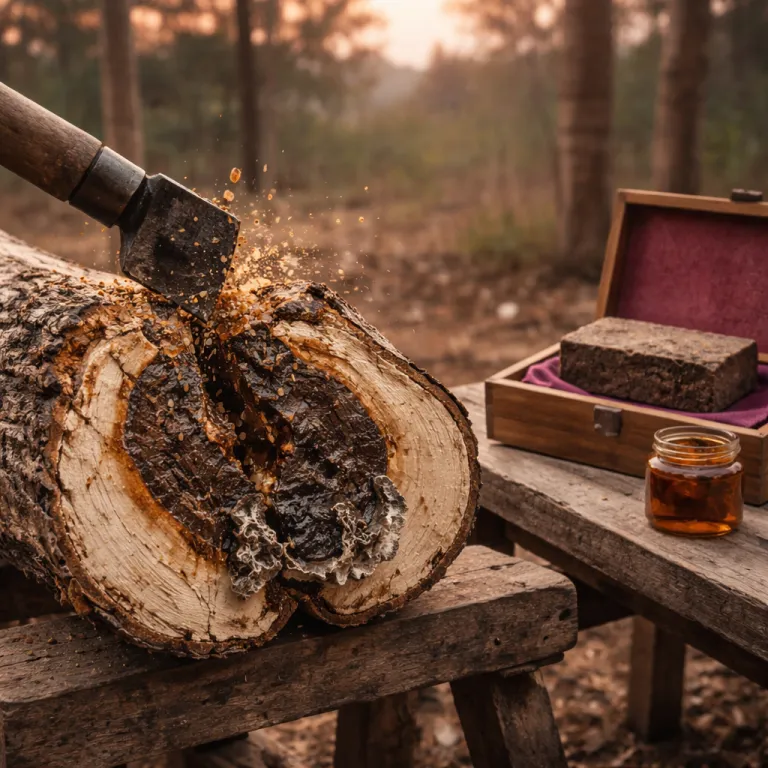
Picture a humid forest in Southeast Asia where a single Aquilaria tree stands among hundreds of healthy neighbours. When that tree is wounded and infected by wood-decaying fungi, it begins to produce a dark resin that slowly transforms pale wood into dense, fragrant agarwood. This is the starting point for any serious attempt to have oud perfume explained in a way that respects biology, rarity and the science behind this resinous wood.
Only a tiny fraction of Aquilaria trees naturally develop this resin, which is why genuine agarwood is scarce and why high quality oud commands such elevated pricing rather than relying on marketing theatre. Infection by fungi from several genera, including Phialophora, Fusarium and Lasiodiplodia[1], triggers a defence response, saturating the wood with aromatic compounds that will later become the backbone of many oud fragrances and oud perfumes. Without this slow, natural process inside the Aquilaria trees, there would be no natural oud to anchor the most revered woody perfumes in the Middle East or beyond, and no reason for collectors to pay prices that can rival a small city car for a kilogram of top grade oil.
Over decades, the infected trees accumulate resin in irregular veins, turning light Aquilaria wood into heavy, almost black oud wood. Older trees, especially an Aquilaria tree several decades old, tend to yield more complex agarwood oil with deeper notes and a more nuanced scent. When perfumers speak of natural oud oils as if they were grand cru wines, they are responding to this long biological drama inside living trees rather than to a simple raw material, and peer reviewed studies on agarwood chemistry now support the idea that age and stress shape the final olfactory profile.
Distilling the dark heart: from agarwood chips to oud oil
Once harvested, the resin rich wood is cleaned, graded, then chipped or powdered before any oud oil can be extracted. Traditional distillers in Southeast Asia soak these agarwood chips in water, then use slow hydro distillation to coax out oils oud that smell smoky, leathery and almost animalic. As one artisan distiller describes it, “you are not just boiling wood; you are persuading the tree to give up its memories.” This is where the story of oud perfume explained shifts from forest ecology to the craft of the still and the technical choices that shape every drop of essence.
Hydro distillation submerges the wood in water, allowing heat and time to pull a dense essential oil with thick, barnyard facets that many connoisseurs prize in artisanal oud oils. Steam distillation suspends the wood above boiling water instead, producing a cleaner agarwood oil with more airy woody notes and less of the feral growl that defines some traditional oud fragrances. Modern producers also use CO₂ extraction, which can capture a more precise snapshot of the resin’s aromatic profile, often yielding a smoother, slightly sweet oud oil that suits contemporary perfumes and refined eau de parfum compositions while preserving more heat sensitive molecules.
Each method shapes the final scent, so two natural oud oils from the same Aquilaria trees can smell radically different on skin. A hydro distilled oil might emphasise smoky wood and animalic base notes, while a CO₂ extract leans into sweet amber nuances and polished woody warmth. When you next evaluate oud perfumes, ask which distillation method was used, because that choice often explains whether the fragrance feels wild, meditative or impeccably groomed, and it can also clarify why one bottle smells barnyard like while another reads as clean, linear and almost minimalist.
Reading an oud in a composition: notes, facets and style
How oud behaves in top, heart and base notes
To have oud perfume explained properly, you need a vocabulary for what your nose is reading on skin. In a complex fragrance, oud rarely stands alone; it threads through top notes, heart and base notes, interacting with citrus, rose, spices and musks. Think of it as a dark instrument in an orchestra, sometimes soloistic, sometimes just thickening the woody chords beneath brighter scents and floral or amber accords.
Smoky, medicinal and sweet oud styles
Smoky oud wood often appears alongside incense and leather notes, creating a scent that feels like charred wood, tarred rope and worn saddles in one breath. More medicinal oud fragrances lean into camphor, iodine and even bandage like nuances, especially when paired with aromatic herbs or sharp spices in the top notes. Then there are sweet oud perfumes, where natural oud or carefully built synthetic oud accords are wrapped in rose, sweet amber and vanilla to create a plush, almost dessert like warmth that still reads as sophisticated rather than sticky, making these compositions ideal entry points for beginners exploring agarwood.
Texture, supporting notes and modern oud accords
Perfumers also play with texture by blending oud oils with other natural oils such as sandalwood essential oil or labdanum resin. In some modern perfumes, a clean wood style synthetic oud is used to give structure without the animalic roar, making the fragrance more approachable for daily wear and office safe settings. When you smell a perfume and sense a shadowy, resin soaked woodiness that lingers for hours, you are likely tracing the outline of oud in the base notes, even if the label barely mentions agarwood or lists it under more generic woody fragrance descriptors.
Real versus synthetic: ethics, CITES and the price of darkness
The more you have oud perfume explained, the clearer one truth becomes: genuine natural oud is both ecologically sensitive and economically extreme. Wild agarwood from old Aquilaria trees is now tightly controlled under CITES regulations, because overharvesting pushed some Aquilaria species towards endangerment. Most Aquilaria species used for agarwood are listed in CITES Appendix II, which regulates international trade rather than banning it outright. That scarcity, combined with the fact that a single tree may yield only a few dozen millilitres of essence[2], underpins the staggering prices attached to top grade oud oils, with trade reports and auction catalogues documenting kilogram prices that can exceed the cost of a modest compact car.
Plantation grown Aquilaria trees in Southeast Asia are now inoculated deliberately to encourage resin formation, often by drilling small holes and introducing fungal cultures or biological stimulants[3], creating a more sustainable pipeline for agarwood oil. These cultivated trees still need years before their resin rich wood can be harvested, but they reduce pressure on wild forests and allow ethical producers to offer natural oud at somewhat more accessible prices. Even so, the finest oils oud from carefully managed plantations can remain very expensive, especially when they capture the complex aromatic spectrum that collectors seek and when batches are documented with CITES permits and traceable sourcing.
Because of this, most mainstream oud fragrances rely heavily on synthetic oud materials that mimic the woody, leathery and smoky facets without using much real resin. Synthetic oud is not a cheat; it is a pragmatic response to ecological limits, and it allows perfumers to explore oud perfumes, oud fragrances and even oud focused eau de parfum creations without depleting Aquilaria trees. For the wearer, the key is transparency, so always read between the marketing lines and ask whether your favourite perfume leans on natural oud, synthetic oud, or a carefully judged blend of both, and whether the brand discloses CITES compliance or sustainability certifications.
Five teaching perfumes: how bottles translate the aquilaria story
Some perfumes function as textbooks on the wrist, turning the abstract idea of oud into a lived scent experience. When you want oud perfume explained through wear rather than words, these compositions reveal how agarwood, rose, spices and resins can be orchestrated. Each one highlights a different facet of oud wood, from smoky to sweet, from ceremonial to provocatively modern, and they can guide you as you compare natural oud oils with more affordable synthetic oud accords.
A heritage niche fragrance might pair natural oud oil with Taif rose and saffron, creating a classic Middle East style accord where sweet amber, leather and incense swirl around dense woody base notes. A more accessible perfume could use mostly synthetic oud alongside clean musks and citrus top notes, giving a polished woody scent that hints at agarwood without overwhelming the wearer. A traditional Middle Eastern oil based perfume, sold as concentrated oils oud rather than spray, often showcases unvarnished natural oud oils with minimal adornment, teaching your nose to recognise the raw material beneath later, more complex perfumes and helping you distinguish barnyard facets from smoother woody tones.
An indie reinterpretation might frame oud fragrances with unexpected partners such as smoky tea, dried fruits or aromatic herbs, showing how versatile this resin soaked wood can be. Finally, a controversial avant garde eau de parfum could push the animalic, almost challenging side of agarwood oil, forcing you to confront why some people find oud addictive while others recoil. Together, these different perfumes and fragrances trace the journey from Aquilaria tree to bottle, leaving you with a wrist that tells the full story of resin, wood and the long shadow of oud, and offering practical reference points when you read perfume reviews or sampling guides.
Key statistics on oud and agarwood
- A very small proportion of Aquilaria trees naturally produce agarwood resin after infection by fungi from genera such as Phialophora, Fusarium and Lasiodiplodia[1], which explains the rarity of high quality natural oud and the dependence on plantation inoculation.
- Older Aquilaria trees, often several decades in age, tend to yield more complex and nuanced agarwood oil suitable for fine oud perfumes, as documented in forestry case studies and chemical analyses of aged resin.
- The amount of essential oil obtained from a single resin rich tree is typically measured in only a few dozen millilitres[2], which contributes to premium level pricing at the top end of the oud market and supports kilo prices reported in trade data that rival luxury goods.
- Ongoing demand for oud fragrances in the Middle East and beyond has driven the development of plantation grown Aquilaria trees and deliberate inoculation techniques[3] to create more sustainable agarwood supplies and to comply with CITES Appendix II export controls.
- Modern analytical studies have identified well over one hundred aromatic compounds in agarwood oil[4], including many terpenoids that shape the woody, smoky and sweet facets prized in oud fragrances and that help perfumers design synthetic oud accords.
Frequently asked questions about oud perfume
How can I tell if a perfume contains real oud or only synthetics?
Labels rarely state exact proportions, but price, brand transparency and the scent profile offer clues. Real natural oud often smells more complex, with shifting woody, smoky and sometimes animalic nuances that evolve for hours on skin. If a fragrance is relatively affordable yet marketed as very oud heavy, it likely relies mainly on synthetic oud materials with perhaps a small amount of natural agarwood oil, and brands that use significant quantities of real oud usually highlight CITES compliant sourcing in their communication.
Why do some oud perfumes smell barnyard like while others feel clean and woody?
The difference usually comes from the type of agarwood used, the distillation method and how the perfumer frames the material. Hydro distilled oud oils from older trees can emphasise animalic, leathery and earthy notes, which some wearers describe as barnyard like. Cleaner, more linear oud fragrances often use steam distilled oils or synthetic oud, then surround them with musks, citrus and woods to create a polished, modern scent, and this contrast is one of the easiest ways to learn how extraction techniques influence the final perfume.
Is buying oud perfume ethical given the pressure on aquilaria trees?
Ethical oud is possible, but it requires attention to sourcing and certification. Look for brands that state they use plantation grown Aquilaria trees, work with CITES compliant suppliers and rely on synthetic oud when appropriate. When in doubt, smaller bottles and less frequent use of very oud heavy perfumes can reduce your personal demand on scarce natural resources, and you can prioritise houses that publish sustainability reports or third party audits.
How should I wear and layer oud fragrances in daily life?
Because oud perfumes often have powerful base notes, start with a light application, especially in close quarters. One or two sprays of an eau de parfum on pulse points is usually enough, and you can soften the effect by layering with a simple rose or sandalwood fragrance. For evenings or open air settings, richer oils oud or more intense oud fragrances can be worn more generously, letting the resinous wood unfold fully and allowing the smoky, leathery and sweet facets to develop over several hours.
What pairs best with oud if I enjoy floral or sweet scents?
Oud and rose remain a classic pairing, because the floral brightness lifts the dark woody core while sweet amber or vanilla adds warmth without cloying. Gourmand leaning perfumes that combine oud wood with tonka bean, cocoa or dried fruits can feel like a sophisticated dessert on skin. If you prefer a fresher style, try oud fragrances that weave in aromatic herbs, citrus top notes or green fig to keep the composition airy while still honouring the depth of agarwood, and consider sampling discovery sets so you can compare different oud perfume styles side by side.
References
[1] Scientific descriptions of agarwood formation commonly cite fungal infection by species from several genera, including Phialophora, Fusarium, Lasiodiplodia and related taxa, as triggers for resin production in Aquilaria wood, for example in peer reviewed plant pathology and forestry journals that survey agarwood-associated microflora.
[2] Industry and academic reports on agarwood distillation note that a single mature resinous tree typically yields only a few dozen millilitres of essential oil after processing, a figure echoed in technical manuals used by commercial distillers and in market surveys that compare oil yield to chip weight.
[3] Plantation inoculation methods described in forestry and agronomy literature include drilling controlled wounds in Aquilaria trunks and introducing fungal cultures or biological agents to stimulate agarwood formation, with field trials published over the last two decades that evaluate resin yield, quality and economic viability.
[4] Gas chromatography–mass spectrometry (GC–MS) analyses of agarwood oil have identified well over one hundred individual aromatic constituents, many of them oxygenated sesquiterpenes and other terpenoids that define the scent profile and are documented in fragrance chemistry research and comparative studies of wild versus cultivated agarwood.
Fragrantica; AramcoWorld; Bon Parfumeur; CITES Appendices; recent agarwood market surveys and auction catalogues.