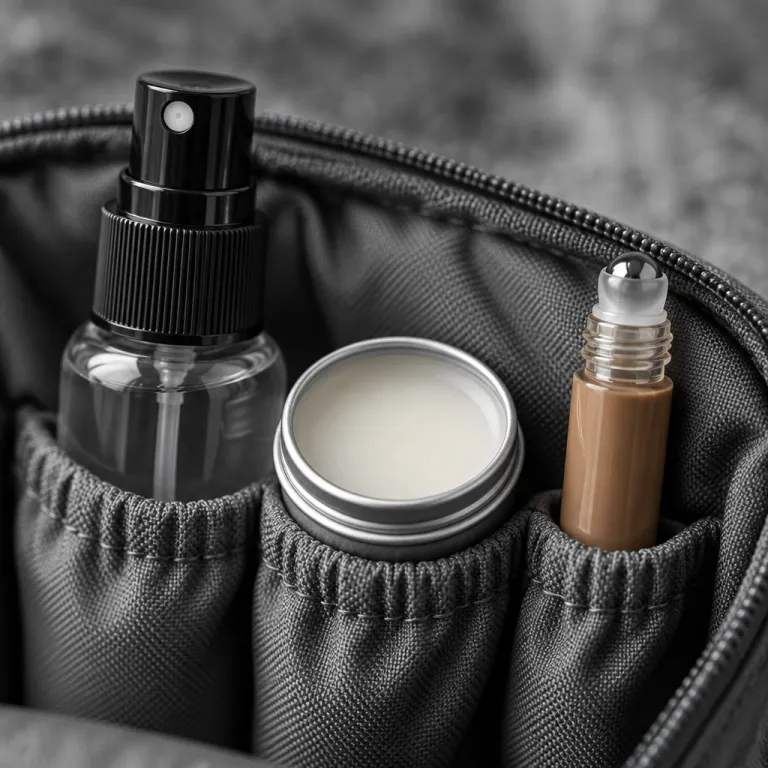
How format quietly rewrites your fragrance experience
The same perfume can feel like a different fragrance when you change the format. A classic alcohol spray perfume in an eau de parfum concentration blooms fast, projects strongly from the skin and hair, and throws a clear scent trail, while the same formula in a perfume oil or solid perfume format stays closer to the body and whispers instead of shouts. If you adore scent but your personal fragrance routine has to survive commutes, air conditioning and close office meetings, then choosing between hair perfume, solid perfumes and perfume oils matters as much as choosing notes of rose, citrus or amber.
Think of each format as a different lens on the same scent. A spray perfume in eau de parfum or eau toilette strength uses alcohol to lift volatile fragrance oils quickly from your pulse points, so you get a bright opening and a clear evolution from top to base notes, while a perfume oil or perfume solid slows that evaporation and keeps the fragrance experience more linear and intimate. When you apply a body mist or perfume mist generously over hair and body, you create a soft halo that feels casual and refreshing, but you sacrifice some longevity compared with a focused application of parfum on pulse points.
For most fragrance lovers, hair mists, solid balms and perfume oils really describe three distinct ways of wearing scent that can be layered or worn alone. A solid fragrance balm, a roll on perfume oil and a dedicated hair perfume mist each interact differently with your skin chemistry, hair texture and daily environment, so understanding their strengths helps you avoid both over spraying and under applying. Once you grasp how alcohol based spray, concentrated perfume oils and compact solid perfumes behave on the body, you can design a personal fragrance wardrobe that feels tailored to your real life instead of to a glossy campaign fantasy.
Alcohol sprays, eau de parfum and eau de toilette on real skin
Alcohol based spray perfume is still the default format because it gives the clearest development of a scent. When you press the atomiser and spray perfume onto your pulse points, the alcohol flashes off quickly, carrying lighter fragrance oils into the air and creating that familiar first mist of top notes that feels bright, airy and sometimes sharp on sensitive skin. This is why an eau de parfum or eau toilette version of the same parfum formula can smell more diffusive and sparkling than its oil or solid fragrance counterpart.
For a newcomer, the key is control rather than fear of the spray. Two to four sprays of an eau de parfum on classic pulse points such as the wrists, neck and the back of the knees usually give enough projection without turning the room into a cloud of perfumes, while an eau toilette often needs one or two extra sprays because it contains a lower concentration of fragrance oils. If you enjoy a perfume cologne style, which sits between a light cologne and a full eau de parfum, you can treat it as a daytime personal fragrance and refresh with a small perfume mist on hair and body later.
Format also shapes how you layer. A focused alcohol spray on pulse points can be paired with a matching body mist over the torso or a hair perfume mist through the lengths of your hair to extend the scent trail without overloading your skin, and this layered hair body approach often feels more modern than simply adding more sprays of the same perfume. When you read about how a numbered eau parfum can become a coded signature in perfumery culture, as explored in this piece on how a number perfume transforms a simple scent into a coded signature, you start to see that format and application points are part of that language too.
Perfume oils and rollerballs for softer, closer scent
Perfume oils and rollerball formats answer a very specific need for many fragrance lovers. If your skin reacts to high alcohol sprays or you work in close quarters where a loud spray perfume feels intrusive, then a perfume oil applied sparingly to pulse points gives you a cocoon of scent that stays close to the body and hair without shouting. In practice, brands such as NEST New York and Byredo report that their oil versions of popular scents often feel richer but more intimate than the matching eau de parfum sprays.
Because perfume oils use a carrier oil instead of alcohol, they evaporate more slowly and keep fragrance oils closer to the skin surface. This makes the scent feel smoother and sometimes sweeter, with less of the sparkling top note lift you get from an eau de parfum spray, and more emphasis on heart and base notes like woods, resins and musks that cling to the body. Many people find that perfume oils and solid fragrance balms last longer on dry skin than a light eau toilette, especially when they apply them to moisturised hair body areas such as the collarbone, inner elbows and behind the ears.
Oil rollerballs also excel at layering with other formats. You can trace a thin line of perfume oil along pulse points, then add a single mist of hair perfume through the mid lengths of your hair to create a gentle scent trail that moves when you move, or you can anchor a breezy body mist with a dab of perfume solid on the wrists so the scent does not vanish after an hour. The rise of alcohol free formats, such as the solar mists discussed in this article on the acceleration of alcohol free fragrance formats, shows how perfume oils and related innovations are reshaping what a personal fragrance can feel like day to day.
Solid perfumes, balms and the art of discreet layering
Solid perfumes and balm compacts are the pocket notebooks of perfumery. A solid perfume is essentially a blend of fragrance oils in a waxy or buttery base, which you warm with your fingertips before pressing onto pulse points, and this makes the scent feel intimate, creamy and very much part of the skin rather than sitting above it. Within a routine that mixes hair mists, solid perfumes and perfume oils, solid perfumes are the most discreet option, ideal for people who want to smell good for themselves and for those close enough to lean in.
Because a perfume solid has no alcohol, it does not project like a spray perfume or even like a generous body mist. Instead, it creates a subtle aura around the application points, which you can top up through the day without overwhelming colleagues or fellow commuters, and this makes solid fragrance balms perfect for scent sensitive environments. Many fragrance lovers use solid perfumes to reinforce a favourite eau parfum or perfume cologne, tracing the balm over the same pulse points where they sprayed earlier to extend the fragrance experience without adding more alcohol to already dry skin.
Solid formats also invite playful layering. You might wear a citrus eau toilette as a morning spray perfume, then add a vanilla leaning solid perfume on the wrists and a light perfume mist through the hair in the afternoon to shift the mood from crisp to cosy, or you could pair a woody perfume oil on the neck with a floral solid fragrance on the décolleté for a more complex scent trail. This kind of layering across perfume oils, solid perfumes and hair perfume mists turns format into a creative tool, not just a practical choice, and it shows how a thoughtful mix of hair mists, solids and oils can feel as curated as a shelf of full size perfumes.
Hair mists, body mists and formats that move with you
Hair perfume mists sit at the intersection of beauty and fragrance. A dedicated hair perfume is usually formulated with a lower alcohol content and sometimes conditioning ingredients, so it can be sprayed generously through the lengths of the hair without drying it out, and this moving cloud of scent creates a different kind of fragrance experience from perfume on the skin alone. When you walk, turn your head or tie your hair up, the scent trail from a hair perfume mist feels airy and dynamic, especially when layered over a subtle perfume oil on pulse points.
Body mists occupy another niche in the wider fragrance format spectrum. A body mist or perfume mist is typically lighter in concentration than an eau de parfum or eau toilette, designed to be sprayed liberally over hair and body after a shower, and it gives an immediate feel good freshness even if it does not last as long as a concentrated parfum. Many people treat body mists as a scented base layer, then add a more focused spray perfume or perfume solid on key pulse points such as the wrists, neck and behind the knees to anchor the scent.
These lighter formats also pair well with atmospheric fragrance rituals. If you enjoy scented candles and home fragrance, you might appreciate how a hair perfume or body mist can echo the mood of an amber, woody or floral candle, as explored in this guide to amber glass candle artistry for fragrance lovers, and this creates a coherent scent story from room to body. When you combine a soft hair perfume mist, a moisturising perfume oil on the skin and a discreet perfume solid in your bag for touch ups, you build a flexible personal fragrance wardrobe that moves with your day instead of fighting it.
Blending techniques and pulse point strategy for everyday wear
Behind every format sits a set of blending decisions that shape how the scent behaves. Perfumers adjust the ratio of top, heart and base notes, as well as the type and amount of fragrance oils, depending on whether they are creating an alcohol based eau parfum, a concentrated perfume oil or a waxy solid fragrance, and these technical choices explain why the same perfume can feel brighter in a spray and deeper in a balm. As perfumer Francis Kurkdjian has noted in interviews, higher concentrations often feel denser and closer to the skin even when they contain more fragrance material, because they rely less on alcohol to push the scent outward.
Application is the final, often overlooked, blending technique. Applying perfume oils and solid perfumes to warm pulse points such as the wrists, inner elbows, behind the ears and at the base of the throat helps the fragrance develop gradually, while a light hair perfume mist through the mid lengths of the hair adds movement and lift to the scent trail without overloading the skin. Many fragrance lovers like to start with a small amount of spray perfume on key points, then layer a complementary body mist or perfume mist over the torso and a tiny amount of perfume solid on the wrists for close encounters.
Thinking in layers rather than in single products changes the whole fragrance experience. A routine might begin with an unscented moisturiser to help fragrance oils cling to the skin, followed by a focused eau de parfum spray on pulse points, a matching or contrasting hair perfume mist for diffusion and a compact solid perfume in the bag for quiet top ups during the day. When you treat formats such as perfume cologne, eau toilette, perfume oils, solid perfumes, hair perfume mists and body mists as tools rather than as status objects, you end up with a personal fragrance wardrobe that feels like it belongs to your life, not to a display shelf.
FAQ
Is perfume oil stronger than a spray perfume ?
Perfume oil is usually more concentrated in fragrance oils than an eau de parfum spray, but it stays closer to the skin and projects less. A spray perfume in an alcohol base throws scent into the air and creates a clearer scent trail, while a perfume oil gives a more intimate fragrance experience that others notice only at close range. Many people find that perfume oils last longer on dry skin, especially when applied to moisturised pulse points.
Where should I apply solid perfume for best effect ?
Solid perfume works best on warm pulse points where blood flow helps the scent develop. Common spots include the wrists, inner elbows, behind the ears and at the base of the throat, and you can also tap a little onto the chest or the back of the neck for a subtle halo. Because solid perfumes are discreet, you can reapply through the day without overwhelming people around you.
Can I use regular perfume in my hair instead of a hair mist ?
You can spray a small amount of regular perfume into your hair, but frequent use of high alcohol sprays can dry the hair fibre over time. Dedicated hair perfume mists are usually formulated with lower alcohol and sometimes conditioning ingredients, so they are safer for repeated use on hair and scalp. If you do use a standard eau de parfum or eau toilette in your hair, keep the spray light and aim for the mid lengths rather than the roots.
How do I layer a body mist with my main perfume ?
A simple approach is to use a body mist as a light base and your main perfume as the focus. Spray the body mist generously over torso, arms and sometimes hair for an all over freshness, then apply two to four sprays of your chosen eau de parfum or perfume cologne on key pulse points such as wrists and neck. You can reinforce the scent later with a small amount of solid perfume or perfume oil on the same points instead of adding many more sprays.
Which format is best for sensitive or reactive skin ?
People with sensitive or reactive skin often do better with perfume oils and solid perfumes than with high alcohol sprays. Oil based and balm formats contain less or no alcohol, which reduces the risk of stinging or dryness, and they allow you to control exactly where the fragrance touches the skin. If you are very reactive, you can also focus on hair perfume mists and apply scent mainly to hair and clothing while keeping direct skin contact minimal.