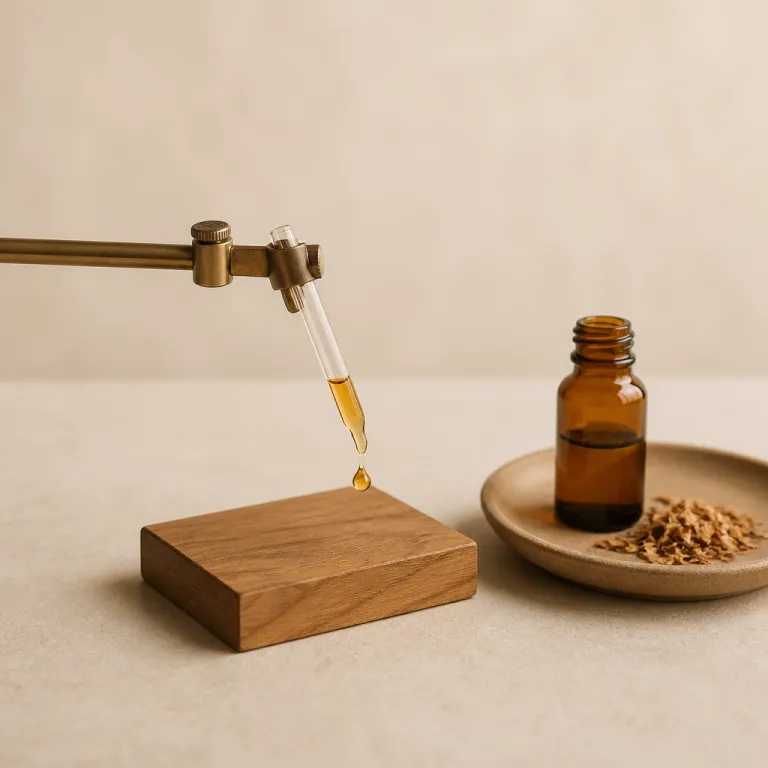
What does teak smell like in modern perfumery
Teak sits in perfumery as a quietly powerful wood that feels both polished and lived in. When fragrance lovers ask what does teak smell like, the most accurate answer is a rich warm blend of dry wood, faint leather, and a subtle salty nuance that recalls sun heated decks on a yacht. The scent is woody rather than smoky, with a warm earthy undertone that feels sophisticated instead of rustic.
Perfumers often describe teak as a woody pillar that supports brighter top notes and plush base notes without ever shouting. If you smell a composition and wonder what this smooth, slightly nutty wood might be, you are probably sensing a teak accord or refined teakwood wrapped in musk and amber. In fine fragrances the scent profile of teak wood is usually polished with spices, soft florals, or resinous notes to create a long lasting and high quality structure.
Compared with cedar or sandalwood, teak feels less creamy and more architectural, like clean lines carved in golden brown wood. This is why many niche fragrances use teak wood to give a warm spicy yet airy backbone that never turns heavy or cloying. When you consider how teak smells on skin after several hours, think of a warm, slightly earthy musky trail that clings to fabric and lingers in the air, similar in mood to the drydown of many modern woody amber perfumes.
Teak as a base note and its role in scent architecture
In modern perfumery, teak usually appears in the base notes where its woody character anchors more volatile materials. The question what does teak smell like at this stage can be answered simply; it smells like a calm, steady wood that extends longevity and keeps the fragrance coherent from top notes to drydown. Because teakwood is structurally dense in nature, perfumers translate that idea into a scent profile that feels stable, long lasting, and reassuring.
When a formula opens with citrus or aromatic top notes, the perfumer often relies on teak wood in the base notes to prevent the fragrance from feeling hollow. This is especially true in warm spicy compositions where cardamom, pink pepper, or nutmeg need a woody frame that smells like polished timber rather than raw sawdust. In such structures, the character of teak becomes a question of texture; it feels smooth, slightly waxed, and quietly rich warm rather than overtly resinous.
Teak also pairs beautifully with amber bases, musks, and soft leather accords to create a warm earthy aura that hugs the skin. If you want to understand how base notes work together, a detailed perfume ingredients guide such as this resource on fragrance bases shows how woods like teak support the entire olfactory architecture. In practice, perfumers may use both natural and natural synthetic teak accords, blending them with other woody materials such as cedar derivatives or sandalwood notes to achieve the best balance between clarity, diffusion, and longevity.
Natural versus synthetic teak accords and their aroma
In commercial perfumery, what does teak smell like rarely comes from large quantities of natural teakwood extract, because the real wood is prized for furniture and boat building rather than distillation. Instead, perfumers build a natural synthetic teak accord that mimics the aroma of the wood while respecting sustainability and cost constraints. These accords are crafted from woody molecules, soft musks, and sometimes amber materials that together smell like teak without requiring the actual timber.
Natural teak wood, when sanded or gently warmed, releases a dry, slightly oily scent that feels both warm earthy and faintly spicy. To recreate what does teak smell like in fragrances, chemists design synthetic structures that capture this woody, earthy musky character while allowing better control over strength and longevity. The result is a scent profile that feels rich warm and polished, ideal for both fine fragrances and scented candles where consistency is crucial.
Many amber based perfumes now weave a top teak style accord into their base to add structure and a subtle maritime twist. If you enjoy reading about warm, resinous accords, a detailed article on the essence of amber perfume helps explain why teak pairs so well with these golden notes. Whether natural or natural synthetic, the key question remains what does teak smell like on skin and in the air; the answer is a balanced, woody warmth that feels modern, understated, and quietly luxurious.
Teak in home fragrance: candles, wax melts, and room scents
Home fragrance lovers often meet teak first through candles and wax melts rather than fine perfume. When you light high quality scented candles labelled teakwood or mahogany teakwood, you immediately understand what does teak smell like in a domestic setting. The hot throw reveals a rich warm, woody aroma with warm spicy and warm earthy facets that make a small room feel like a well appointed library.
Many brands blend teak wood with mahogany, vanilla, or amber to create mahogany teakwood style candles that feel both polished and comforting. In these compositions, the teak scent becomes intertwined with other woods, so the overall scent profile leans toward earthy musky, slightly sweet, and gently smoky without becoming harsh. Wax melts using a teak accord often emphasize the best aspects of the wood, offering long lasting diffusion that can rival larger candles in terms of perceived longevity.
For enthusiasts who want to find perfect home scents, teak based candles and wax melts offer a versatile option that works in living rooms, offices, and even bathrooms. Many online retailers highlight free shipping and bundle offers, but the real value lies in the high quality wax, balanced fragrance load, and stable wick that allow the woody aroma to burn cleanly. When you compare how teak smells in home fragrances with its role in perfume, the impression is slightly cozier, a touch sweeter, and designed to create an enveloping atmosphere rather than a personal trail.
Teak in personal fragrance: from skin to car interiors
On skin, what does teak smell like once the initial spray settles; it becomes a soft, woody veil that feels tailored and quietly sensual. Many unisex fragrances use teak wood in the base notes to bridge the gap between crisp top notes and deeper resins, creating a scent profile that feels both structured and approachable. The result is a rich warm trail that suits office wear, evening events, and even casual weekends.
Teak also appears in car fragrances, where its woody character helps neutralize unwanted odors without leaning too floral or sugary. When you choose a car scent that smells like teakwood or mahogany teakwood, you are effectively bringing the atmosphere of a well crafted wooden interior into a compact space. Drivers often report that teak in a car reads as clean, slightly masculine, and long lasting, with a warm earthy undertone that makes daily commutes more pleasant.
Because teak based fragrances tend to have good longevity, they work well in both small travel sprays and larger bottles. If you want to find perfect options, look for compositions where teak wood appears alongside musk, amber, or soft spices rather than heavy gourmands. For readers interested in the technical side of formulation, a detailed article on what actually goes into a perfume bottle explains how woods like teak interact with solvents, stabilizers, and other ingredients to create a stable, high quality fragrance.
How to evaluate teak based scents and choose the best compositions
When you test a perfume or candle and wonder what does teak smell like here, start by focusing on the drydown rather than the opening. Teak wood usually reveals its true character after the top notes fade, leaving a woody, warm earthy base that can feel either airy or dense depending on the formula. Pay attention to whether the aroma leans more earthy musky, warm spicy, or slightly salty, because this will determine how the scent fits into your wardrobe or home.
For personal fragrances, the best teak compositions balance natural and natural synthetic materials to achieve clarity, diffusion, and longevity without harshness. A well crafted teak accord should smell like clean, polished wood rather than pencil shavings or damp sawdust, and it should blend seamlessly with other base notes such as amber, musk, or soft leather. When you ask what does teak smell like in a truly high quality perfume, the answer is a rich warm, subtly complex wood that never dominates but always supports.
In home fragrance, evaluate teak scented candles and wax melts by their burn quality, scent throw, and how the woody notes evolve over time. A top teak style candle should project enough aroma to fill a small room without overwhelming it, and the wax should melt evenly to avoid tunneling or wasted product. Whether you are choosing a car freshener, a bottle of perfume, or a set of scented candles, the key is to find perfect teak based scents that align with your taste for warmth, subtlety, and long lasting comfort.
Key figures and data about teak and woody fragrance preferences
- Industry reports consistently show that woody fragrances, including those featuring teak style accords, make up a significant share of fine fragrance launches, reflecting strong consumer demand for warm earthy and woody profiles.
- Publicly available market analyses on home fragrance describe steady growth for scented candles and wax melts, with teakwood and mahogany teakwood inspired scents frequently highlighted among popular woody options in North America.
- Surveys published by major retailers and trade publications often note that many candle buyers prefer long lasting woody or warm spicy aromas for living rooms, which aligns with the popularity of teak wood blends in both premium and mass market collections.
- Perfume houses and ingredient suppliers regularly state in interviews and technical brochures that using carefully designed natural synthetic teak accords instead of large quantities of natural wood helps control raw material costs while maintaining a high quality scent profile and reliable longevity.
FAQ: what does teak smell like and how is it used
Does teak in perfume come from real teak wood
Most modern perfumes use a natural synthetic teak accord rather than large amounts of natural teak wood extract. This approach protects the timber resource while giving perfumers precise control over the woody aroma. The resulting scent still smells like teak, with a warm earthy and slightly salty character.
How does teak differ from sandalwood or cedar in scent
Teak smells drier and more architectural than sandalwood, which is creamier and more lactonic. Compared with cedar, teak feels less sharp and pencil like, offering a richer warm woody tone with subtle earthy musky nuances. Many people experience teak as sitting between these woods, providing structure without dominating the fragrance.
Why is teak popular in scented candles and wax melts
Teak based scented candles and wax melts offer a versatile woody aroma that suits living rooms, offices, and bedrooms. The scent profile feels cozy yet refined, often blended with amber, vanilla, or mahogany notes for added depth. Because teak accords usually have strong longevity, they provide a long lasting atmosphere even in small spaces.
What does teak smell like in car fragrances
In car fragrances, teak typically smells like clean, polished wood with a hint of warm spicy and warm earthy depth. This profile helps neutralize unwanted odors without leaning too floral or sugary, which many drivers find distracting. The result is a subtle, long lasting woody scent that makes daily commutes more pleasant.
How can I find perfect teak based fragrances for my collection
Start by sampling both personal fragrances and home scents that list teak wood, teakwood, or mahogany teakwood in their note pyramids. Pay attention to how the woody base notes interact with top notes and mid notes, and whether the overall aroma feels rich warm or too heavy for your taste. Over time you will identify which teak based scents offer the best balance of quality, longevity, and personal comfort.