Why where you store perfume matters more than you think
Ask any perfumer how to store perfume properly and they will mention four enemies. Heat, light, humidity and air exposure quietly attack every perfume bottle on your dresser, even when the scent still smells fine to an untrained nose. Over time these forces reshape the fragrance molecules, dull the top notes and turn what was once luminous into something flat or even sour.
Perfume is chemistry in a beautiful glass bottle, and chemistry hates instability. Ultraviolet light exposure breaks delicate fragrance molecules apart, while repeated temperature changes accelerate oxidation and make fragrance oils degrade faster than they should. Humidity and constant air exposure then join the party, slowly stripping away the original character you paid for and hoped to preserve for longer wear.
Think of your favorite eau de parfum as a living formula rather than a static object. The more you open the bottle, leave it in a bright room or store perfumes near radiators, the more you invite invisible damage that only shows up months later. Proper perfume storage is not fussy collector behavior ; it is the difference between a scent that still feels like the perfume original and one that smells like a tired copy.
The four enemies of fragrance: light, heat, humidity and oxygen
Light is the most obvious threat, yet many fragrances sit proudly on sunny window ledges. Direct sunlight and even strong indoor light heat the liquid inside perfume bottles, causing both light exposure and light heat stress that speed up chemical breakdown. Over time you will notice color changes in the perfume, especially in citrus heavy scents where bright top notes fade first.
Heat and temperature changes are just as destructive, even when you cannot see them. A room that swings from cool dark mornings to hot afternoons forces the fragrance molecules to expand and contract, which accelerates oxidation and makes the scent age before its time. Constant warmth near radiators or electronics can also thin the fragrance oils and disturb the balance between top notes, heart and base.
Humidity and air exposure complete the quartet of damage. Storing perfume in a steamy perfume bathroom exposes the alcohol base to moisture, which can cloud the liquid and subtly warp the scent over longer periods. Every time you open the bottle you let in fresh air, and that oxygen slowly eats away at the original structure, so smart perfume storage is really about slowing this inevitable process.
For a deeper dive into how environmental factors affect other scented objects, you can read this guide on how to prevent candle tunneling for fragrance lovers, which echoes the same themes of heat, light and care.
The bathroom myth and other everyday perfume storage mistakes
The most common place people store perfume is also the worst. A bathroom seems logical because you get ready there, yet every hot shower floods the room with humidity and sudden temperature changes that punish both the bottle and the scent. Over months this steamy environment can make fragrances smell muddier, with once bright top notes turning dull and slightly stale.
Leaving perfume bottles on open shelves or vanity trays near windows creates a different but equally serious problem. Constant light exposure, even through frosted glass, slowly bleaches the liquid and destabilizes fragrance molecules, especially in delicate eau de parfum formulas rich in citrus or green notes. You may notice that the perfume original color deepens from pale straw to amber, while the scent itself feels heavier and less nuanced.
Another quiet mistake is keeping perfumes on top of radiators, near heaters or close to sunny car dashboards. This kind of light heat combination bakes the fragrance oils and speeds up air exposure damage each time you spray, so the perfume will not last as long on the skin. If you love your fragrances, treat them less like bathroom décor and more like a good wine that deserves a cool dry, stable resting place.
While you are rethinking where to store perfume, you might also enjoy this piece on elegant ways to light a candle without a lighter, which shares the same quiet ritual mindset that good perfume storage requires.
What proper perfume storage looks like in real life
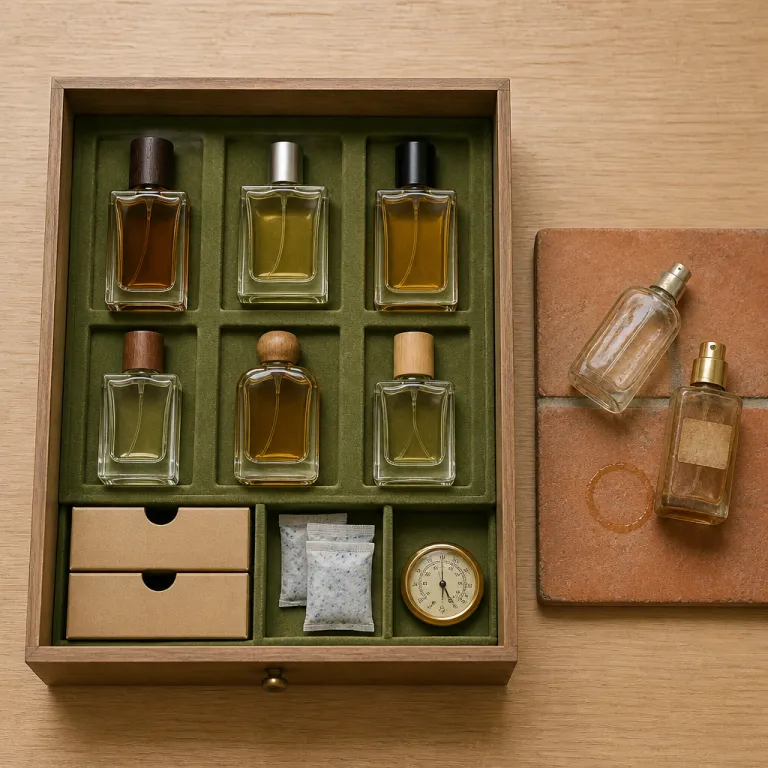
Good perfume storage does not require a dedicated perfume fridge or a walk in vault. The goal is simply to store perfumes in a cool dark, stable environment where light, heat and humidity stay under control most of the time. For most homes that means an interior drawer, a closed wardrobe shelf or a shaded cupboard far from radiators and windows.
Keeping each perfume in its original packaging is one of the easiest wins. The cardboard box shields the bottle from light exposure and cushions it from minor temperature changes, which helps preserve both color and scent over a longer period. If you love seeing your perfume bottles, compromise by displaying one or two decants and keeping the main bottles boxed in a dry place nearby.
Room temperature is usually perfect as long as it stays relatively stable. Aim to store perfume where the temperature feels comfortable for you year round, avoiding attics, cars and window ledges that swing wildly between hot and cold. A cool dry closet shelf, away from bathroom steam and kitchen heat, will keep the fragrance molecules calmer so the scent you spray next season still feels recognizably original.
If you are curious about how different concentrations behave, this overview of top eau de toilette options can help you compare how lighter formulas respond to storage versus denser parfums.
Decants, travel sprays and the question of air exposure
Decanting can be both a friend and a foe when you think about how to store perfume properly. Small travel sprays are brilliant for keeping your main perfume bottles untouched at home, which reduces air exposure and preserves the original formula for longer. At the same time every decanting step introduces more air into the liquid, so sloppy transfers can shorten the scent’s ideal life.
If you love splitting perfumes into multiple bottles, choose high quality atomizers with tight seals and opaque walls. Fill each travel bottle almost to the top to minimize the air gap, then store these decants in a cool dark drawer rather than tossing them into a hot car or humid bathroom. Treat each small spray as a working bottle and keep the large original packaging tucked away in a dry place where temperature changes are minimal.
Rollerballs and dabber bottles behave slightly differently because they expose the liquid to air more slowly but more often. Each time you open a dabber, you invite oxygen into the neck of the bottle, which gradually alters the balance between top notes and base, especially in lighter fragrances. For your rarest perfume, consider limiting decants and instead store perfume in its main bottle, using it mindfully so the fragrance oils age gracefully rather than collapsing under constant air exposure.
How to tell if your fragrance has turned and what lasts longest
Even with perfect care, no perfume lasts forever, so it helps to know the signs of change. Start by looking at the liquid in the bottle under neutral light, checking for color changes, cloudiness or sediment that were not present when the perfume was new. A darker shade does not always mean disaster, but combined with a flat or sour scent it usually signals that the fragrance molecules have oxidized.
Next, pay attention to how the scent opens on your skin. If the sparkling top notes vanish almost instantly, replaced by a heavy, slightly metallic or vinegar like smell, the fragrance has probably suffered from too much light heat or air exposure over time. Perfumes stored in a humid perfume bathroom or on hot shelves tend to show this collapse earlier than those kept in a cool dry, shaded space.
Different styles of fragrances age at different speeds, which can reassure you if you own richer blends. Fresh citrus colognes and airy eau de parfum compositions usually have a shorter ideal life, while dense orientals and pure parfums can remain beautiful for many years when you store perfume carefully. The key is always the same ; limit light, stabilize temperature, avoid humidity and respect the bottle as a fragile container for something more complex than it looks.
Do you really need a perfume fridge or special gear ?
The idea of a dedicated perfume fridge sounds glamorous, but for most people it is unnecessary. Refrigeration can help in very hot climates, yet extreme cold followed by warm air can cause condensation and extra humidity around the bottle, which is not ideal for long term storage. Unless your home regularly exceeds comfortable room temperature, a simple cool dark cupboard will usually protect fragrances just as well.
What matters more is consistency and common sense. Avoid placing perfume bottles near windows, radiators, stoves or any source of light heat that could cook the fragrance oils over time. Choose a stable, dry place such as an interior closet shelf, keep perfumes in their original packaging when possible and resist the urge to line them up as décor in a steamy perfume bathroom.
Think of your collection as a small archive rather than a display. When you store perfumes with care, you extend the life of each scent and keep the original character intact, so every spray feels like a deliberate choice rather than a compromised memory. In the end, where you keep your perfume quietly decides whether it will still smell like itself when you reach for it years from now.
Key figures on perfume stability and storage
- Most modern perfumes remain in good condition for around three to five years when stored in a cool dark, dry place at stable room temperature, according to guidance commonly shared by major fragrance houses.
- Laboratory tests on aromatic compounds show that exposure to strong UV light can significantly degrade some fragrance molecules within a few weeks, which explains why window ledge storage quickly dulls citrus and green notes.
- Industry chemists note that higher temperatures roughly double the rate of many oxidation reactions for every 10 °C increase, meaning a perfume kept near a heater can age far faster than one stored in a cool cupboard.
- Heavier compositions such as oriental fragrances and high concentration parfums often outlast lighter eau de parfum and eau de toilette formulas, with well stored bottles sometimes remaining enjoyable for a decade or more.
FAQ about how to store perfume properly
How should I store perfume day to day so it lasts longer ?
Store perfume in a cool dark, dry place away from windows, radiators and bathrooms, ideally inside its original packaging on an interior shelf or drawer. Keep the bottle tightly closed between uses to limit air exposure and avoid frequent moves between hot and cold rooms. These simple habits slow oxidation and help preserve the scent’s original character for a longer period.
Is it bad to keep perfume in the bathroom ?
Yes, a bathroom is one of the worst places for perfume storage because hot showers create humidity and sudden temperature changes that stress both the bottle and the liquid. Over time this combination can cause color changes, cloudiness and a noticeable loss of bright top notes. A bedroom closet or hallway cupboard offers a much safer, more stable environment.
Do I need a special perfume fridge to protect my fragrances ?
A dedicated perfume fridge is rarely necessary if your home stays within a comfortable temperature range. Refrigeration can help in very hot climates, but moving bottles repeatedly between cold storage and warm air can create condensation and extra humidity around the sprayer. For most collectors, a consistently cool dry cupboard or drawer works just as well without the extra equipment.
How can I tell if my perfume has gone bad ?
Signs that a perfume has turned include noticeable color changes, cloudiness, or sediment in the bottle, along with a scent that opens flat, sour or metallic instead of bright and balanced. If the top notes vanish quickly and the remaining fragrance smells off on your skin, the fragrance molecules have likely oxidized. While not dangerous, a badly degraded perfume usually will not give the experience the perfumer intended.
Does decanting into travel sprays help or harm perfume longevity ?
Decanting into small, well sealed atomizers can help protect the main bottle by reducing how often you open it, which limits air exposure. However, each transfer step introduces some oxygen, so it is important to fill travel sprays carefully, minimize the air gap and store them in a cool dark place. Use decants as working bottles and keep the original perfume stored safely to balance convenience with preservation.