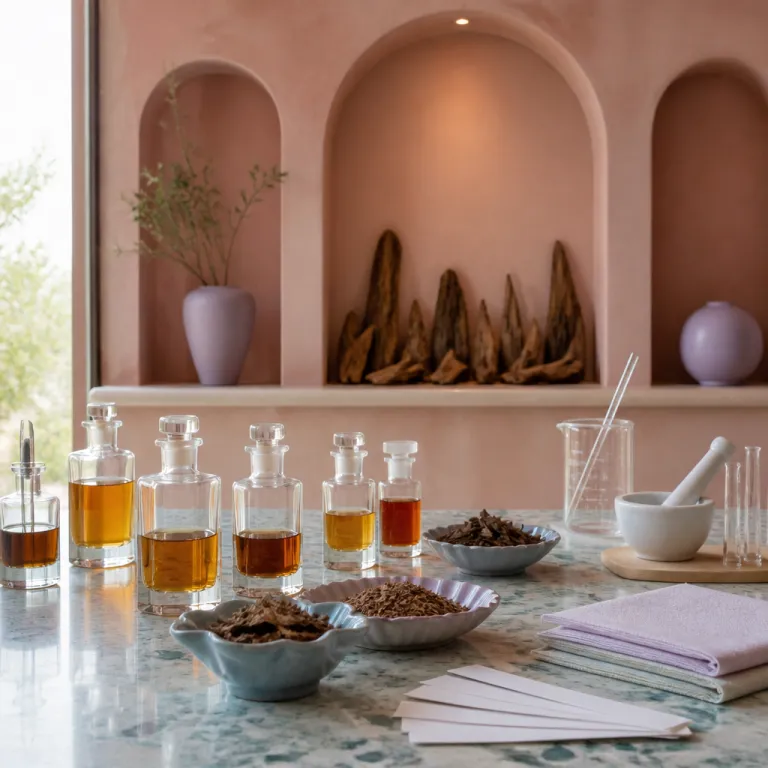
From incense palaces to global wardrobes: how middle eastern niche perfume houses evolved
Middle Eastern niche perfume houses began by translating majlis air into liquid incense and oud. Early perfume houses such as Amouage (founded in Oman in 1983), Rasasi (Dubai, 1979) and Arabian Oud (Riyadh, 1982) built an identity around dense Eastern accords of smoky incense, rose, saffron and animalic oud that could fill a marble hall. That first wave of Arab brands helped define how the global perfume market imagined the Middle East and its fragrances, especially as oil-based attars and concentrated sprays reached duty-free counters and specialist boutiques in the late 1980s and 1990s.
Creed, though firmly European, became a status symbol in the Gulf and quietly shaped expectations for luxury fragrance among high-income buyers. When Aventus, launched in 2010, started circulating in private clubs across United Arab Emirates and Saudi elites, it sat next to towering attars of pure oud and amber, creating a bridge between Western perfumes and traditional Arabian oud oils. That tension between French-style freshness and Arab incense depth still underpins many Middle Eastern niche perfume houses today, from heritage brands to newer independent labels that blend Paris-trained perfumers with regional creative directors.
As the market matured, a new generation of perfume houses based in the United Arab Emirates and beyond began asking a different question. Instead of asking how loud a fragrance could project, these brands asked how a perfume could move from Dubai to Paris to Singapore without losing its soul. This shift opened space for lighter yet high-quality compositions where oud, amber and incense became textures rather than blunt instruments, allowing wearers to build a more versatile fragrance wardrobe that spans office, travel and evening wear.
Dubai’s rise as a fragrance capital accelerated this evolution and gave Middle Eastern niche perfume houses a global stage. Events such as Salon du Parfum Dubai (launched in the mid-2010s) and regional showcases inspired by Esxence in Milan turned the city into a testing ground where Arab perfumers, European noses and indie creators from the wider Middle East could trade ideas. In that crucible, oud-gold attars met airy musks, and the next chapter of Eastern perfumery quietly took shape through limited editions, travel-retail exclusives and boutique-only launches that often sell out via word of mouth rather than mass advertising.
The second generation: storytelling, skin feel and quieter oud
A second generation of Middle Eastern niche perfume houses is now rewriting the oud playbook with more nuanced tools. Widian, formerly AJ Arabia (rebranded in 2016), frames each perfume as a journey through the Middle East, yet its fragrances sit comfortably next to Parisian niche on a collector’s shelf. Kayali, created by Mona Kattan in the United Arab Emirates in 2018, leans into layering and sweetness, but its perfumes often keep oud as a soft accent rather than a roaring centerpiece, which makes them easier to wear in offices, cafés and everyday settings without sacrificing regional character.
These newer perfume houses understand that younger Arab and international clients want a fragrance wardrobe, not just a single signature beast-mode oud. They build collections where one perfume feels like a linen shirt in the Dubai heat, another like a velvet jacket in a London club, and a third like bare skin after a day at the beach in the Middle East. Oud appears in these perfumes as a polished wood note, sometimes molecular, often paired with vanilla, tonka or even green tea to keep the texture transparent and contemporary while still hinting at traditional bakhoor smoke.
European niche brands have taken note of this shift and now create Middle Eastern editions that echo the same logic. Xerjoff’s regional exclusives, for instance, use oud and amber in more faceted ways, while still appealing to the Arab market that loves richness and quality. Even when you compare a classic French-style scent such as Chanel Coco Mademoiselle to a more oriental-leaning flanker, you can see how brands tweak patchouli, amber and citrus to speak to both Western and Eastern tastes, a dynamic explored in depth in this detailed Coco Mademoiselle eau de parfum review on specialist fragrance platforms.
For collectors, this second generation of Middle Eastern niche perfume houses offers something crucial. You can now wear an Arabian-inspired perfume to a quiet office, a minimalist gallery opening or a long-haul flight without overwhelming anyone in the cabin. The oud remains, but it whispers in the base, wrapped in musks and airy woods, rather than shouting from the first spray, which encourages more people to experiment with Middle Eastern perfume houses beyond special occasions and ceremonial gatherings.
Mass prestige challengers: Armaf, Afnan, Lattafa and the quality price equation
Parallel to the ultra-niche movement, a cohort of value-driven Middle Eastern perfume houses has reshaped expectations around quality–price ratios. Armaf, Afnan, Lattafa, Swiss Arabian and Al Haramain operate at the intersection of mass and niche, yet their best perfumes often show a surprising level of complexity. These brands are based largely in the United Arab Emirates and the wider Middle East, and they understand both the local perfume market and the global hunger for accessible luxury, especially among younger collectors building their first serious fragrance wardrobe.
Take Armaf Club de Nuit Intense Man, often shortened to Club Nuit by fans, which turned the idea of an affordable smoky citrus chypre into a worldwide talking point after its 2015 release. The broader Armaf Club line now includes multiple perfumes that play with incense, leather and oud in ways clearly inspired by both Creed and Arabian Oud traditions. When people speak about Armaf Club creations, they are really talking about how a Middle Eastern perfume house reverse-engineered Western icons, then re-exported them with an Eastern accent and a more approachable price tag.
Afnan follows a similar path but leans slightly more into narrative and texture, with lines that explore amber–oud pairings, gourmand woods and even fresher interpretations of oud-gold style accords. Collectors often compare Armaf–Afnan offerings because both brands chase high-quality materials at accessible prices, yet Afnan perfumes sometimes feel smoother on skin while Armaf pushes bolder contrasts and louder projection. Lattafa, meanwhile, has built a reputation for dense, resinous fragrances that echo traditional Arab incense rituals while still flirting with fruity and floral trends that appeal to a broader audience on social media.
Haramain and its Edition Haramain releases sit somewhere between heritage and experimentation, often focusing on amber–oud combinations that feel plush yet wearable. Swiss Arabian balances classic Arabian oud oils with more modern sprays, giving newcomers a bridge into the culture of oil-based perfumes. For readers curious about how creamy, comforting accords can be reimagined within this context, the sensory analysis in this Biancolatte creamy scent editorial offers a useful lens for evaluating texture and sweetness in Eastern-style fragrances and comparing them to familiar gourmand perfumes from designer counters.
Oud reimagined: from smoke monster to skin scent
Oud once functioned as a status signal in the Middle East, a dense, smoky, sometimes barnyard note that announced your arrival before you entered the room. First-generation Middle Eastern niche perfume houses leaned into that power, pairing oud with rose, saffron and incense to create perfumes that clung to fabric for days. For many Western wearers, these early oud perfumes felt thrilling yet intimidating, like stepping into a crowded Arab souk at night, full of burning bakhoor and perfumed textiles.
The new wave of perfume houses, both indie and established, is treating oud more like a color on the palette than the entire painting. Perfumers now use fractionated or molecular oud materials that keep the woody, leathery facets while stripping away some of the animalic smoke, which makes the resulting fragrances easier to wear in air-conditioned offices and minimalist apartments. Younger Arab consumers often ask for oud that smells clean, polished and modern, something that nods to tradition without feeling like a heavy ceremonial oil or overpowering incense stick.
This has led to playful combinations where oud meets unexpected partners such as coffee, pistachio gelato, saffron ice cream or even green tea. Amber–oud duos are being lightened with musks and citrus, while oud-gold style accords are sometimes framed with airy florals to create a sense of lift. When done well, these perfumes feel like silk abayas catching a breeze rather than velvet curtains trapping smoke, and they encourage daily wear rather than being reserved only for weddings or formal gatherings in the Gulf.
For collectors used to Western designer staples, a good entry point into this evolving oud landscape is to compare a familiar woody aromatic to a modern Middle Eastern creation. A fragrance such as Montblanc Explorer, often reviewed as a versatile everyday scent, can be contrasted with a softer amber–oud composition from a Middle Eastern perfume house to understand how the same woody backbone can be dressed differently, as explored in this in-depth Montblanc Explorer eau de parfum analysis on enthusiast review sites. That kind of side-by-side testing trains the nose to notice how oud has shifted from blunt force to subtle shading.
Dubai, indie creators and what comes after the second generation
Dubai has quietly become a gravitational center for Middle Eastern niche perfume houses and indie creators alike. The city’s boutiques, from mall flagships to tucked-away concept stores, curate perfumes from Arab, European and Asian brands in a way that flattens old hierarchies. You can smell a tiny indie perfume house from the United Arab Emirates next to a heritage French maison and a Japanese micro brand, all on the same blotter strip, which makes comparison and discovery much easier for curious perfume lovers.
Events such as Salon du Parfum Dubai and regional showcases inspired by Esxence Milan have turned the city into a live laboratory for the future of Eastern perfumery. Here, buyers from the United Arab Emirates, Saudi Arabia, Europe and North America test new perfumes side by side, giving instant feedback on projection, texture and storytelling. That feedback loop helps Middle Eastern niche perfume houses refine their balance between Arabian richness and global wearability, especially when planning limited editions or travel-retail exclusives aimed at frequent flyers.
As international conglomerates invest in niche brands worldwide, from BDK Parfums to Xinú, the Middle Eastern perfume market becomes even more strategically important. High-income buyers increasingly favor niche perfumes over designer offerings, which encourages both indie and established perfume houses to push for high-quality raw materials and more daring compositions. The result is a landscape where a gold-edition flanker from a value brand can sit comfortably next to a limited-edition Haramain release or a carefully crafted Swiss Arabian extrait on the same shelf.
For the serious collector, the most interesting action now lies in the spaces between categories. Watch how Arabian oud oils are being translated into lighter sprays, how Armaf and Afnan refine their quality–price positioning, and how smaller houses from the Middle East experiment with club-ready yet nuanced fragrances. The future of Middle Eastern niche perfume houses will likely belong to those who can honor incense-filled heritage while creating perfumes that feel as natural in a Berlin bar as they do in a Dubai majlis, bridging cultures through scent and turning regional traditions into a truly global perfume language.
FAQ
Are middle eastern niche perfume houses only about strong oud fragrances ?
Early Middle Eastern niche perfume houses focused heavily on powerful oud, incense and amber combinations that projected strongly. The newer second generation still uses oud, but often in softer, more textured ways that feel suitable for offices, travel and everyday wear. You can now find both intense Arabian oud styles and quieter, skin-hugging interpretations within the same brand, which makes exploring Middle Eastern perfume houses less intimidating for newcomers.
How do Armaf, Afnan and Lattafa compare to traditional niche brands on quality price ?
Armaf, Afnan and Lattafa operate at lower price points than many European niche houses, yet their best perfumes can offer impressive complexity and longevity. Collectors often praise these brands for delivering a strong quality–price ratio, especially in lines that explore amber–oud, oud-gold and club-ready woods. While the raw materials may not always match ultra-luxury houses, the overall experience frequently exceeds expectations for the cost and encourages experimentation with multiple bottles.
What is the difference between arabian oud oils and spray perfumes from the same houses ?
Arabian oud oils are usually concentrated, alcohol-free and worn in small dabs on pulse points, giving a slower, more intimate development. Spray perfumes from the same houses blend oud with alcohol, musks, florals and other notes, creating a more diffusive and often more versatile fragrance. Many Middle Eastern niche perfume houses now offer both formats so wearers can choose between traditional intensity and modern ease, or even layer oils under sprays for extra depth.
Why is Dubai considered a key hub for the perfume market in the middle east ?
Dubai hosts major fragrance events, houses regional headquarters for many brands and offers a dense network of boutiques that stock both local and international perfumes. This concentration of expertise, retail and passionate consumers makes the city a testing ground for new launches and concepts. As a result, trends that succeed in Dubai often influence what Middle Eastern niche perfume houses create for the wider global market, from limited editions to permanent collections.
How can a collector start exploring middle eastern niche perfume houses without feeling overwhelmed ?
A practical approach is to begin with lighter compositions that feature oud as a supporting note rather than the star. Sampling sets from brands such as Widian, Kayali, Swiss Arabian or Haramain allow you to compare different balances of amber, woods and florals before moving into denser Arabian oud styles. Over time, you can build a wardrobe that spans airy daywear, club-ready woods and ceremonial attars, all within the universe of Middle Eastern niche perfume houses and related Arabian perfume traditions.