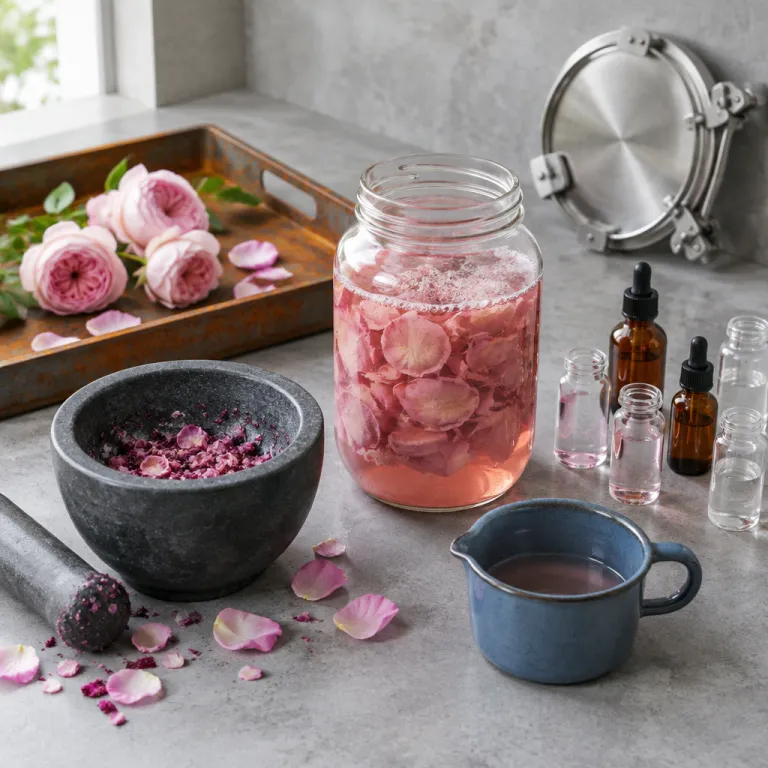
When natural starts in a field and ends in a steel tank
Stand in a rose field at dawn and the word natural feels simple. Then follow that same rose into a stainless steel tank where cell biotechnology turns plant sugars into scent molecules, and the meaning of natural suddenly fractures. For anyone who lives with a complex fragrance wardrobe, this gap between image and process is now impossible to ignore.
The fragrance industry has quietly embraced biotechnology as climate pressure, land scarcity and volatile harvests make traditional natural ingredients harder to secure. Vanilla, patchouli and sandalwood are textbook cases where sustainable fragrance sourcing now depends on biotech ingredients that reduce environmental impact while stabilizing the supply chain. When brands talk about biotech perfume ingredients as natural, they are often referring to fragrance molecules grown by precision fermentation rather than extracted from a plant in the ground.
Here is the core tension: the ingredient can be chemically identical to the natural extracts, yet its production happens in a bioreactor fed with plant-based sugars instead of in a field. For perfumers, that is a triumph of technology and a cutting-edge approach to protecting natural resources while maintaining high-purity fragrance ingredients. For consumers who read natural ingredients on a label, the mental picture is still a flower, not a fermenter humming in an industrial park.
To understand why this matters, look at Givaudan’s Ambrofix, a woody amber note now ubiquitous in modern fragrance. Givaudan states that Ambrofix is produced by fermenting sustainably sourced sugarcane, using around one hundred times less land per kilogram than the traditional route from clary sage.1 The scent is the same ambergris-like halo you know from niche and designer beauty launches, but the ingredient now sits at the intersection of biotechnology, sustainable production and marketing semantics.
Givaudan goes further with Akigalawood, which the company describes as one hundred percent natural and made with white biotechnology from upcycled patchouli oil.2 On paper, Akigalawood is a dream of sustainable fragrance: it transforms a by-product of natural extracts into new fragrance molecules with a lower environmental impact. On the bottle, though, the word natural floats free of context, and the quiet label fight over biotech ingredients versus traditional naturals is only just beginning.
How precision fermentation actually makes a rose, vanilla or sandalwood note
Forget the sci-fi imagery for a moment: precision fermentation in fragrance is closer to brewing than to a chemistry set. A microorganism such as a yeast or bacterium is programmed at the cell level to produce a specific fragrance molecule, then fed with plant sugars in a controlled tank until it secretes the desired ingredient. The result is a high-purity material that can be identical to a natural ingredient from a plant, but made with far less land, water and time.
In practice, the process starts with mapping the scent molecules that give a rose, jasmine or sandalwood its characteristic fragrance. Biotech teams identify the genes in a plant cell that code for those fragrance molecules, then insert them into a microbial cell that thrives in fermentation. During production, this engineered cell biotechnology converts simple plant-based feedstocks into complex fragrance ingredients with a consistency that fields and weather can never guarantee.
For perfumers, this approach is a gift: it offers reliable fragrance ingredients that behave predictably in a formula, while easing pressure on fragile ecosystems. A rose note built from biotech ingredients can be tuned for diffusion, stability and environmental impact in ways that raw natural extracts cannot always match. When you rinse off a tea tree body shampoo that promises purity and clarity, you are already comfortable with the idea that a clean beauty product can mix natural ingredients and advanced technology in one bottle.
Companies such as Givaudan, Firmenich and the merged dsm-firmenich group are investing heavily in this biotechnology process. Their fragrance molecules from fermentation now sit alongside traditional natural extracts in the palettes used by perfumers at every major maison. Behind the scenes, the fragrance industry is shifting from a model dominated by fields and forests to one where cell biotechnology and precision fermentation quietly underpin the next generation of sustainable fragrance.
Yet the label on your bottle rarely tells you whether a key ingredient came from a plant in the soil or from a plant cell line in a tank. The same word natural can legally cover both a rose absolute from Grasse and a fermentation-derived ingredient grown from sugarcane in a fermenter, as long as the starting material is of biological origin. That regulatory grey zone is exactly where marketing steps in and where the meaning of biotech perfume ingredients as natural becomes contested terrain.
The regulatory grey zone where natural means almost anything
Regulators in the United States and European Union have not created a clear third category for fermentation-derived fragrance ingredients, so industry practice fills the gap. If a fragrance molecule starts from a biological feedstock such as plant sugars and is transformed by fermentation or other biological processes, many companies feel justified in calling it natural. On paper, that aligns with certain technical definitions, but on skin it collides with what most fragrance lovers think natural actually means.
Consider how you read a label that promises natural ingredients and a sustainable fragrance story built around rose, sandalwood or vanilla. You probably imagine fields, farmers and slow extraction, not a bioreactor where cell biotechnology turns glucose into scent molecules under fluorescent light. The chemistry may be impeccable and the environmental impact genuinely lower, yet the language on the box still leans on a pastoral fantasy that no longer matches the production reality.
This is not unique to fine fragrance: the same ambiguity appears in home scent, personal care and even supposedly clean, phthalate-free fragrances marketed as safer choices. Brands can truthfully say that their fragrance ingredients are derived from natural resources while omitting that the key ingredient was never part of a harvested flower. The result is a quiet erosion of trust, especially among collectors who care about how their beauty products align with their values.
There is also a competitive incentive to stretch the word natural as far as possible in a crowded fragrance industry. When one brand markets biotech ingredients as a more sustainable, plant-based alternative without naming fermentation, others feel pressure to follow the same approach. Over time, the consumer-facing meaning of natural risks drifting so far from its intuitive sense that it becomes little more than a mood word.
An honest framework would acknowledge three distinct families of fragrance molecules: traditional natural extracts, petrochemical synthetics and biotech ingredients produced by precision fermentation or related technology. That third category is where much of the cutting-edge work now happens at Givaudan, Firmenich and dsm-firmenich, yet it remains largely invisible on packaging. Until labels catch up, the phrase biotech perfume ingredients natural will continue to blur chemistry, marketing and ethics in ways that leave even informed perfume lovers guessing.
What an honest label would say, and why you are unlikely to see it
If the industry wanted clarity, a bottle could state something like this: rose note composed of natural extracts and fermentation-derived fragrance molecules from plant-based sugars. That single sentence would tell you that your scent blends field-grown material with biotech ingredients made through precision fermentation, without implying that one is morally superior. It would also signal that sustainable fragrance is not a binary choice between natural and synthetic, but a spectrum of approaches to balancing beauty and environmental impact.
Such transparency would change how we talk about iconic notes like sandalwood, especially in fragrances where the real Mysore wood has long been replaced by a mix of synthetics and biotech molecules. When you read a deep dive on sandalwood in a perfume like Santal Majuscule by Serge Lutens, you are already engaging with the idea that a complex fragrance can be built from many different kinds of ingredient. Extending that honesty to biotech perfume ingredients would help collectors understand how their favourite scent balances natural resources, technology and artistry.
Yet there are strong reasons why most labels will not rush toward this level of detail. Marketing teams know that the word natural still sells, while biotechnology and fermentation sound clinical to many people who romanticize fragrance as liquid nature. As long as regulations allow fermentation-derived fragrance ingredients to sit under the same natural umbrella as traditional plant extracts, the commercial incentive is to keep the story soft focus.
For serious perfume lovers, the response should not be to reject biotech out of hand, but to ask sharper questions. Which ingredients in this scent are from fields, which from petrochemical plants, and which from cell biotechnology using plant sugars in a fermenter? How does this particular production process change the environmental impact of the fragrance molecules that end up on my skin?
Biotech is genuinely good news for the planet, especially when it replaces land-hungry crops or protects endangered species, yet it is genuinely murky news for anyone who still trusts the word natural at face value. The old natural versus synthetic argument collapses when a rose note can be grown in a tank from sugar and still be legally called natural, even though no petal was ever picked. What lingers on the wrist at midnight is the same luminous scent, but the story behind that beauty now runs through steel, cells and code as much as through soil and sun.
Key figures shaping the future of biotech perfumery
- Givaudan reports that its Ambrofix, produced by fermenting sustainably sourced sugarcane, uses around one hundred times less land per kilogram than the traditional clary sage route, illustrating how precision fermentation can dramatically reduce land use in fragrance production compared with field-grown crops.1
- Industry analyses from major houses such as Givaudan and dsm-firmenich indicate that biotechnology-derived fragrance ingredients already represent a significant and growing share of new launches, reflecting a structural shift away from exclusive reliance on natural extracts and petrochemical synthetics in the global fragrance industry.3
- Life cycle assessments published by leading aroma chemical producers show that fermentation-based fragrance molecules can cut greenhouse gas emissions and water consumption versus conventional natural ingredients, especially for land-intensive crops like vanilla and patchouli, though exact percentages vary by process and region.4
- Reports from sustainability teams at large fragrance suppliers highlight that using plant sugars as feedstock for cell biotechnology allows high-purity fragrance ingredients to be produced on far smaller footprints, reducing pressure on natural resources while stabilizing the supply chain against climate-related harvest failures.5
Frequently asked questions about biotech and precision fermentation perfume
Is a fermentation-derived natural ingredient still considered natural? In many regulatory frameworks, yes: if the starting material is biological and the transformation uses biological processes such as precision fermentation, the resulting fragrance molecule can be classified as natural, even if it never existed in a flower or leaf.
Are precision fermentation perfume ingredients safer than synthetics? Safety depends on the specific molecule, not just the production method. Fermentation-derived fragrance ingredients, petrochemical synthetics and traditional naturals all undergo safety assessments; biotech does not automatically make a material safer, but it can improve purity and consistency.
Do biotech fragrance molecules always have a lower environmental impact? Many life cycle assessments suggest that fermentation-based ingredients can reduce land use, water consumption and greenhouse gas emissions compared with some field-grown crops, but the actual footprint depends on factors such as feedstock, energy mix and process efficiency.
References
- Givaudan, Ambrofix product documentation and sustainability communications.
- Givaudan, Akigalawood ingredient description and white biotechnology materials.
- Public sustainability and innovation reports from Givaudan and dsm-firmenich on the growth of biotechnology-derived fragrance ingredients.
- Life cycle assessment summaries published by major aroma chemical manufacturers comparing fermentation-based and conventional natural ingredients.
- Sustainability reports from large fragrance suppliers detailing land use, water consumption and supply chain resilience for biotech fragrance molecules.