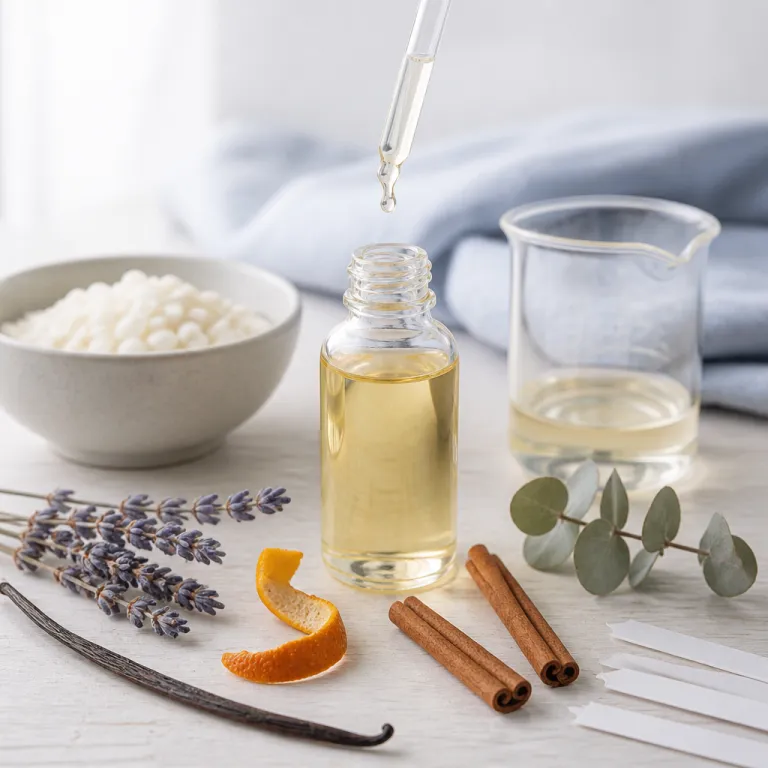
From wax to aura: what gives candles their smell
Every scented candle begins with a simple base of wax and transforms into an atmosphere-shaping object through perfume. To understand what gives candles their smell, it helps to picture the candle as a miniature diffusion engine where wax, fragrance oil, essential oils, wick and temperature interact with precision. When these elements are balanced, the candle scent feels seamless and the fragrance seems to float effortlessly through the room.
The primary role of candle wax is to act as a fuel that carries fragrance, so the type of wax you choose will decide how the scent behaves over time. Paraffin, soy wax, coconut blends and beeswax each bind fragrance oils differently, which changes both the hot throw and the scent throw when the candle is cold. A softer wax can hold a higher fragrance load, but if the wax fragrance is overloaded, the candle may tunnel, smoke or smell weaker than expected.
When people ask what gives candles their smell stronger character, the answer usually lies in the relationship between oil, wax and the wick. As the wick burns, it melts a pool of wax that releases fragrance oil and essential oils into the air, and this molten layer must stay at the right temperature to vaporize the aromatic molecules without burning them. If the wick size is wrong for the vessel and wax, the pool overheats, the fragrance degrades and the candle fragrance can smell flat, burnt or strangely faint.
Fragrance oils, essential oils and the art of top notes
In perfumery, top notes are the first impression, and the same principle explains what gives candles their smell in the first minutes after lighting. The most volatile components of fragrance oils and essential oils rise quickly from the hot wax pool, creating that immediate candle scent you notice when you enter a room. Citrus, herbs and some spices dominate these early moments, while heavier base notes wait in the background until the candle has burned for a longer time.
During candle making, perfumers design the fragrance oil blend so that top notes remain bright even at candle flame temperature, which is far higher than on skin. A well-balanced fragrance load ensures that these delicate molecules do not burn off too quickly, preserving a refined scent throw instead of a brief flash of aroma. When the formula is wrong, scented candles can smell sharp at first and then collapse into a dull wax fragrance that feels disconnected from the fragrance description on the label.
Fans of modern spicy top notes often look for pink pepper accords, which behave beautifully in both perfume and candle fragrance. If you enjoy this sparkling effect, explore a detailed analysis of the magnetic charm of pink pepper scent in modern perfumery and notice how similar principles apply when building a candle scent. Those same bright molecules that make a fragrance feel effervescent on skin can also make the hot throw of a candle feel more luminous and airy.
Wax, wick and temperature: engineering a beautiful scent throw
The technical side of what gives candles their smell involves careful control of heat, because temperature governs how fragrance molecules leave the wax. When a candle burns, the wick draws liquid oil, wax and molten fuel upward, where combustion creates a hot zone that must stay stable for an even scent throw. If the flame is too small, the wax pool remains cool and the candle smells weak; if it is too large, the pool overheats and the fragrance can scorch.
Choosing the correct wick size for each type of wax is one of the most underestimated skills in candle making. A larger container filled with dense soy wax or a hard paraffin blend needs a stronger wick to achieve a full melt pool, while a softer wax for wax melts or votives may require a gentler wick to avoid smoking. When this balance is right, the candle fragrance diffuses consistently from edge to edge, and the room fills with layered smells rather than pockets of intensity.
To make this balance actionable, many artisans follow a simple testing protocol: they pour three to five identical candles with different wick sizes, trim each wick to the same length, then burn them for set intervals while recording melt-pool diameter, flame height and perceived scent strength. By comparing these controlled test burns at different room temperatures, they can fine-tune wick choice, wax blend and fragrance load until the candle scent feels both nuanced and stable.
Fragrance load, curing time and why some candles smell stronger
Many enthusiasts assume that what gives candles their smell is simply the amount of fragrance oil poured into the wax. In reality, the fragrance load must stay within a narrow range that the chosen candle wax can safely hold, otherwise the oil separates, the wick drowns and the candle may even pose a fire risk. Most high quality scented candles use a fragrance load between roughly 6 and 12 percent, adjusted for the specific type of wax and the volatility of the formula, as outlined in technical data sheets from major wax manufacturers such as IGI and AAK.
Equally crucial is the cure period, which is the time the candle rests after pouring so that wax and fragrance oils can fully bind. During this cure phase, the crystalline structure of soy wax or blended wax stabilizes, trapping the fragrance evenly and preparing it for a more powerful scent throw once lit. If you burn a candle too soon, the top layer may smell strong while the deeper wax smells faint, leading to a disappointing hot throw after the first few hours.
Artisans who want their candles to smell stronger often extend the cure time, especially for soy-based blends and complex compositions with many top notes. They also test different ways to add fragrance, sometimes splitting the fragrance oil addition between slightly cooler and slightly warmer wax temperatures to improve binding. When you read an in-depth article about candle making or any article that explains performance testing, you will notice repeated references to cure schedules, fragrance load percentages and controlled burn trials, often supported by supplier guidelines and small-scale lab tests.
Soy, paraffin and blends: how type of wax shapes the aroma
The base material is a quiet but decisive factor in what gives candles their smell, because every wax has its own scent, density and melting profile. Traditional paraffin offers excellent hot throw and can carry both fragrance oils and essential oils with clarity, yet some connoisseurs prefer the softer, creamier character of soy wax. Beeswax and coconut blends add their own subtle smells, which can either complement or compete with delicate top notes in a candle fragrance.
When perfumers design a candle scent, they consider whether the natural aroma of the candle wax will enhance the composition. A green fig accord, for example, can feel rounder in soy, while a crisp aldehydic floral may shine more in a neutral paraffin base that does not add extra wax fragrance. For wax melts, which rely entirely on hot throw without a visible flame, makers often choose blends that melt quickly at lower temperature so that fragrance oil diffuses rapidly yet evenly.
Blended systems also influence how quickly candles develop their full scent throw over time, especially after repeated burns. A harder outer shell with a softer inner core can slow the melt and extend the life of the fragrance load, while still allowing the candle to smell stronger during each session. If you enjoy reading about how raw materials shape olfactory character, an exploration of how musk evolved from animal origin to modern molecules offers a parallel to how wax choices frame and support the aromatic heart of a candle.
From top notes to room aura: translating perfumery into candle making
Perfumers trained in fine fragrance often bring their expertise in top notes to candle making, which refines what gives candles their smell in the first minutes of burning. On skin, citrus and aromatic herbs evaporate quickly, but in a candle they must survive repeated heating cycles and long burn times without turning harsh. This requires careful selection of fragrance oils and essential oils that remain stable at candle flame temperature while still feeling bright and diffusive.
To achieve this, creators often pair sparkling top notes with supportive heart notes that help anchor them in the wax matrix. A bergamot accord might be woven with lavender, transparent woods and a trace of musk so that, as the candle burns down, the scent throw evolves gradually instead of collapsing after the initial hot throw. The result is a candle scent that feels more like a complete perfume, with a clear opening, a textured heart and a soft drydown in the air.
Serious artisans document every variable in their article-style lab notes, from pour temperature and wick size to the exact time each test candle burns before evaluation. They compare how different oils, waxes and fragrance load levels influence both immediate smells and the way the candle fragrance lingers on fabrics and surfaces. Over multiple iterations, they refine the balance between wax, oil–wax interactions and combustion so that the final candle can smell stronger without ever feeling overwhelming or unrefined.
Key figures that shape candle scent performance
- Many manufacturers recommend a fragrance load between 6 and 10 percent for paraffin-based candles, while soy wax often performs best between roughly 7 and 12 percent, according to technical sheets from major wax suppliers such as IGI (International Group Inc.) and AAK.
- Consumer testing by several home fragrance brands shows that most people perceive an ideal scent throw when a medium-sized candle burns for about 3 to 4 hours at a time, which allows a full melt pool without overheating the wax in typical living-room conditions, as summarized in trade publications from the home fragrance sector.
- Laboratory evaluations of candle emissions have found that keeping wick size correctly matched to vessel diameter can reduce soot formation by more than 30 percent compared with oversized wicks, based on data reported in safety guidance from the National Candle Association and standards developed under ASTM candle performance methods.
- Market surveys from home fragrance retailers indicate that soy and soy blend candles now represent more than half of premium candle sales by volume, reflecting growing interest in cleaner-burning waxes with softer, more natural smelling profiles, as reported in industry market overviews and retail sales analyses.
FAQ about what gives candles their smell
How does wax influence the way a candle smells ?
Wax acts as both fuel and carrier for fragrance, so its composition affects how quickly and evenly scent molecules are released. Paraffin tends to give a stronger hot throw, while soy wax and natural blends offer a softer, sometimes more nuanced candle fragrance. The inherent smell of the wax can either support or slightly tint the fragrance profile, especially in lighter top note focused compositions.
Why do some candles smell strong in the store but weak at home ?
Cold scent throw in a shop often feels intense because many candles are grouped together in a small space. At home, factors such as room size, air circulation, wick size and burn time determine how the candle scent develops. If the fragrance load, wax type and wick are not well matched, the candle may never reach the temperature needed for a satisfying hot throw.
What is curing and why does it matter for candle fragrance ?
Curing is the resting period after pouring when wax and fragrance oils fully bind and stabilize. During this time, the crystalline structure of the wax sets, which improves both cold and hot scent throw once the candle is burned. Skipping or shortening the cure can lead to uneven smells, with a strong first burn followed by weaker performance later.
Can essential oils be used alone to scent candles ?
Essential oils can be used in candles, but they behave differently from synthetic fragrance oils and often have lower stability at high temperature. Many artisans blend essential oils with carefully chosen aroma molecules to improve safety, consistency and scent throw. Pure essential oil candles may smell softer, change character over time and require especially careful testing of wick size and fragrance load.
Why does my candle tunnel or leave wax on the sides of the jar ?
Tunneling usually indicates that the wick size is too small for the vessel or that the candle was not burned long enough to create a full melt pool. When only the center melts, less wax is exposed to heat, so fewer fragrance molecules evaporate and the candle smells weaker. Allowing each burn to reach the container edge and choosing a properly wicked candle help ensure both better performance and a more even scent throw.