From headshop cliché to structural base: how patchouli really works
Patchouli carries a stubborn reputation that clings like incense smoke. Many people still picture a single heavy perfume oil, sold in cluttered headshops, rather than a refined patchouli perfume note quietly shaping luxury fragrances. Yet this same patchouli perfume note underpins some of the most polished perfumes on the market, from discreet office scents to complex evening parfum compositions such as Chanel Coco Mademoiselle or Dior Sauvage Elixir.
When perfumers talk about patchouli, they rarely mean that loud, unblended oil you might remember from student days. They mean a versatile base note that anchors a fragrance structure, giving weight to citrus top notes, depth to floral hearts, and a long lasting trail that keeps the whole scent coherent on skin. In technical terms, patchouli acts as a fixative, slowing the evaporation of more volatile notes and helping the perfume feel seamless from first spray to final whisper. Much of this effect comes from heavy molecules such as patchoulol (also called patchouli alcohol), which evaporate very slowly and lend a velvety, woody backbone.
Think about the last time you admired a sophisticated woody amber fragrance and praised its smoothness. There is a strong chance that an elegant patchouli fragrance sat in the base, stitched between amber, vanilla, and woods, even if the marketing never mentioned patchouli at all. Many modern patchouli fragrances are built so that the patchouli note feels textural rather than obvious, more like a shadow under the bottle’s bright facets than a soloist demanding attention. Iconic examples include Thierry Mugler Angel, where patchouli supports a gourmand accord, and Narciso Rodriguez for Him, where it threads through musks and woods.
The hidden backbone in familiar perfumes
Patchouli appears in thousands of mainstream perfumes and niche fragrances, even in bottles that lean fresh, clean, or gourmand. A crisp eau de parfum with citrus and neroli may use a fractionated patchouli perfume note to add subtle earthiness and extend the scent’s life without smelling overtly earthy patchouli. That means people who insist they hate patchouli perfumes are often already wearing patchouli fragrances daily, just in a refined, modern form. Fresh-leaning compositions like Chanel Chance Eau Fraîche or Acqua di Parma Colonia Intensa use patchouli fractions in precisely this discreet way.
Classic houses such as Guerlain rely on patchouli as a structural base, weaving it under amber, vanilla, and balsamic notes to create depth. In many Guerlain perfumes, the patchouli note is not meant to shout; it is there to frame the composition, much like a dark wooden gallery frame around a luminous painting. Mitsouko, Shalimar, and Habit Rouge all use patchouli in different proportions to stabilise their chypre or oriental structures. Once you start paying attention, you will notice how often patchouli leaves its quiet fingerprint on your favourite fragrances, from office friendly eau de toilette to denser extrait de parfum.
What patchouli actually smells like: from raw leaves to refined fractions
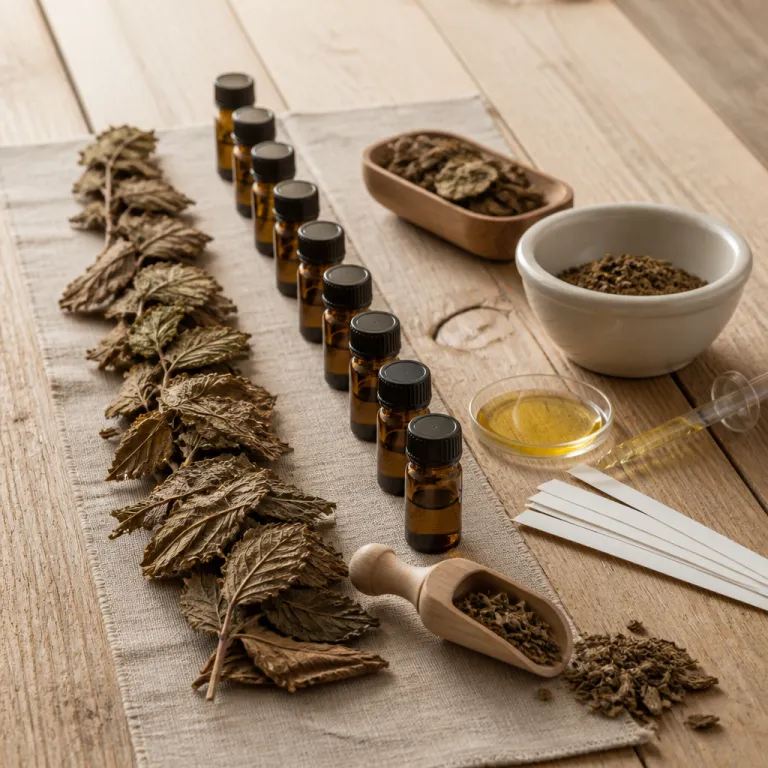
The patchouli plant itself offers a surprise for many fragrance lovers. Fresh patchouli leaves smell green, slightly minty, and almost herbal, nothing like the dense, earthy patchouli perfume note you may know from perfume. The transformation happens after harvest, when the patchouli leaves are partially dried, fermented, and distilled into essential oil that becomes the backbone of many patchouli perfumes. This essential oil contains a complex mix of sesquiterpenes and alcohols, with patchoulol, norpatchoulenol, and pogostol among the key odorants.
Raw patchouli oil can feel rough, earthy, and even a little muddy, especially in cheaper essential oil form. High quality material, aged for several years in proper conditions, shifts dramatically; the scent deepens into something smoother, with nuances of damp woods, tobacco, and even dark chocolate wrapped in soft amber. This is where the classical patchouli character emerges, the one that gives patchouli fragrance its reputation for warmth, mystery, and longevity on skin. Well-aged patchouli from regions such as Sulawesi or Aceh in Indonesia is particularly prized by perfumers for its rounded, cocoa-like profile.
Modern perfumery also uses fractionated patchouli, where specific molecules are removed to refine the scent. These patchouli fractions keep the woody, slightly cocoa toned depth while stripping out some of the rough, earthy patchouli edges that can feel overwhelming in a full strength patchouly oil. Common examples include so-called “clear patchouli” or “patchouli coeur,” which reduce camphoraceous facets and emphasise clean woods. If you enjoy a clean woody perfume that lasts all day, there is a good chance a discreet patchouli note is working behind the scenes, supported by musk materials often discussed in guides to modern musk ingredients such as those explored in a detailed top musk overview.
From earthy to chocolate and amber
As patchouli oil ages, its profile becomes rounder and more gourmand. The earthy patchouli facets soften, and new tones appear that recall cocoa powder, dark chocolate, and even a faint roasted coffee nuance in some patchouli fragrances. Perfumers love pairing this matured patchouli perfume note with vanilla, amber, and resinous notes to create plush, enveloping perfumes that feel like a cashmere wrap rather than a tie dye shirt. Fragrances such as Prada Candy Night or Tom Ford Black Orchid showcase this chocolate-tinged, ambery patchouli style.
In many amber fragrances, patchouli acts as the dry, woody counterpoint to syrupy vanilla and labdanum. That tension between dry and sweet keeps the perfume from becoming cloying, especially in richer eau de parfum or extrait de parfum concentrations. When you smell a chocolate and amber accord that feels balanced instead of sticky, you are often smelling the quiet discipline of patchouli holding the structure together. Classic orientals like Yves Saint Laurent Opium or Guerlain Shalimar rely on this interplay, with patchouli threading through resins and balsams to keep the structure poised.
Patchouli as a base note fixative: why your scent lasts
Base notes are the slowest to evaporate in a perfume, and patchouli sits firmly in this category. A well judged patchouli perfume note can keep a fragrance present on skin for eight hours or more, especially when combined with woods, resins, and musks. This is why patchouli appears so frequently in woody, oriental, and chypre perfumes, even when the marketing story focuses on rose, jasmine, or citrus. Industry estimates from trade publications and supplier briefs suggest that a majority of modern fine fragrances include some form of patchouli or patchouli-derived material in their base, even when it is not highlighted in the official note pyramid.
In a classic chypre structure, patchouli partners with oakmoss, bergamot, and floral notes to create a sophisticated, slightly mossy scent profile. The patchouli note adds both dryness and depth, helping the perfume transition smoothly from sparkling top to shadowy base without collapsing. Many patchouli perfumes in this style feel timeless, and their longevity often comes less from heavy amber overdoses and more from the disciplined use of patchouli as a fixative. Iconic chypres such as Chanel Coco, Guerlain Mitsouko, and Sisley Eau du Soir all rely on patchouli to knit their citrus, floral, and mossy facets together.
Gourmand fragrances also lean heavily on patchouli to keep edible notes from feeling flat. When perfumers build chocolate and vanilla accords, they often rely on patchouli fragrance materials to add a bitter, cocoa like backbone that stops the scent from smelling like simple dessert. Mugler Angel is the textbook example: its famous chocolate–caramel accord would feel syrupy without the dry, earthy patchouli underneath. Articles that unpack misunderstood ingredients, such as a detailed exploration of how vanilla behaves beyond cliché, can help you see how patchouli and vanilla often work together as structural partners rather than competing notes.
How patchouli behaves in different concentrations
In an eau de toilette, patchouli tends to feel lighter, more transparent, and often more woody than earthy. The same patchouli perfume note in an eau de parfum or parfum concentration can feel denser, with the chocolate and amber facets more prominent and the earthy patchouli tones more velvety. This is why a patchouli fragrance may seem intimidating in a heavy extrait but surprisingly wearable in a fresher eau format. Comparing something like Chanel Coco Mademoiselle Eau de Toilette to its richer Eau de Parfum illustrates how concentration shifts the emphasis of the patchouli base.
Perfumers also adjust the balance of patchouli with other base notes to control projection and trail. A patchouli heavy base blended with amber and vanilla will feel warmer and more enveloping, while a base that pairs patchouli with dry woods and musk will feel cleaner and more architectural. Understanding this role of patchouli as a base note fixative helps you read perfume descriptions more confidently and choose the level of depth you want in your own fragrances. If you prefer subtlety, look for mentions of “patchouli fraction” or “clean woods”; if you enjoy drama, seek out descriptions that highlight dark patchouli, resins, and balsams.
From Indonesian fields to your bottle: the journey of patchouli
Most of the world’s fine patchouli oil comes from Indonesia, where the plant thrives in humid, tropical conditions. Industry sources often estimate that Indonesia supplies around 80–90% of global patchouli essential oil, with significant production in Sulawesi, Sumatra, and Java. Farmers harvest the patchouli leaves, allow them to wilt and partially ferment, then distil them to produce the essential oil that becomes the core of many patchouli perfumes. The quality of the soil, the fermentation process, and the distillation technique all influence the final patchouli perfume note that reaches your favourite bottle.
Fermentation is a crucial step that separates fine perfumery patchouli from cheaper, sharper smelling oils. During this stage, enzymes and microorganisms transform the raw material, smoothing harsh green facets and deepening the earthy patchouli character into something more complex and rounded. A carefully controlled fermentation can coax out those prized chocolate, tobacco, and amber nuances that make patchouli fragrance so addictive in high end perfumes. Poorly managed fermentation, by contrast, can leave the oil smelling musty or moldy, which is why reputable suppliers invest heavily in training and quality control.
Once distilled, patchouli oil often rests for months or even years before use. This aging process allows the scent to settle, much like wine or whisky, and it is during this time that the classical patchouli profile fully emerges. If you have ever compared a harsh, freshly opened patchouly oil to a mellow, rounded patchouli fragrance in a luxury parfum, you have already experienced the impact of time and technique on this material. Many niche houses specify “vintage patchouli” or “aged patchouli” in their descriptions to signal this smoother, more complex quality.
Understanding what really goes into your fragrance
For fragrance newcomers, the technical side of ingredients can feel opaque. Learning how patchouli travels from patchouli leaves in Indonesian fields to a refined patchouli perfume note in your favourite eau de parfum can make the whole perfume world feel more approachable. A clear guide to perfume ingredients that explains how materials are sourced, processed, and blended can be invaluable when you want to understand what actually goes into the bottle on your dresser. Seeing patchouli listed alongside naturals like bergamot or jasmine and synthetics like ambroxan or galaxolide also demystifies how modern formulas combine different families of materials.
Knowing the source and treatment of patchouli also helps explain price differences between perfumes. A fragrance that uses carefully aged, high quality patchouli oil will usually feel smoother, richer, and more nuanced than one built on cheaper, unaged material. When you smell a patchouli fragrance that feels plush rather than scratchy, you are often smelling the result of meticulous sourcing and patient maturation rather than simple concentration strength. This is one reason why a patchouli-forward niche extrait can justify a higher price than a mass-market eau de toilette that relies on more basic patchouli qualities.
Learning to love patchouli: modern styles, key bottles, and how to test
Reframing patchouli starts with smelling the right examples on your own skin. If you associate patchouli only with heady oils, begin with a modern patchouli perfume note that leans airy and woody rather than dense and smoky. Sampling on paper strips is useful, but patchouli’s role as a base note means you really understand it only after several hours of wear on your wrist. Try following a fragrance from first spray to bedtime to see how the patchouli base quietly shapes the entire experience.
Look for patchouli perfumes that pair the note with iris, soft woods, or transparent musks for an easy entry point. Many patchouli men fragrances in the pour homme category use patchouli as a clean, tailored backbone, proving that earthy patchouli can feel polished and urbane rather than bohemian. Dior Homme Intense, Bleu de Chanel, and Terre d’Hermès all use patchouli in different ways to give structure without shouting “patchouli.” On the more opulent side, some patchouli fragrances wrap the note in amber, vanilla, and even chocolate accords, creating plush, almost edible scents that still feel adult.
Niche houses have built entire identities around patchouli, offering a spectrum from classical patchouli to experimental interpretations. You will find patchouli nobile style compositions that emphasise elegance, patchouli reminiscence style scents that nod to vintage bohemia, and elixir patchouli style extraits that push intensity to the limit. Even within a single brand, you might encounter a restrained coromandel edt style patchouli, a darker ambra aurea style amber patchouli, and a more incense driven take that shows how flexible this note can be. Exploring these variations side by side is one of the fastest ways to train your nose to recognise patchouli’s many faces.
How to test patchouli like a perfumer
When you test a patchouli fragrance, pay attention to how the scent evolves from first spray to drydown. At the start, you may notice citrus, florals, or spices, but as the hours pass, the patchouli perfume note will emerge more clearly, often alongside amber, vanilla, or dark chocolate nuances. Smelling at intervals over six to eight hours will teach you more about patchouli than any marketing copy ever could. Make brief notes about what you smell at 10 minutes, one hour, three hours, and six hours to track how the base develops.
It also helps to compare different styles side by side, such as a clean woody patchouli, a gourmand chocolate patchouli, and a resinous amber patchouli. You might find that you dislike one style but love another, which is why writing off patchouli entirely rarely does justice to this complex material. In the end, patchouli is less a single scent than a whole family of fragrances, and learning its language will make you a more confident, curious perfume wearer. Once you can recognise patchouli’s signature, you will start spotting it everywhere—from mainstream designer launches to the most experimental niche creations.
FAQ
Why does patchouli smell different from one perfume to another ?
Patchouli smells different across perfumes because perfumers use various qualities, ages, and fractions of the oil, then blend them with different notes. A fresh, fractionated patchouli can feel woody and transparent, while aged oil can smell richer, with chocolate and amber nuances. The surrounding ingredients, such as vanilla, musk, or citrus, further shape how the patchouli perfume note appears on your skin. In short, origin, processing, and context all change how you perceive patchouli.
Is patchouli always strong and heavy in a fragrance ?
Patchouli is not always strong or heavy; it depends on dosage and style. In many modern fragrances, patchouli is used in small amounts as a base note fixative, adding depth and longevity without dominating the scent. You might be wearing patchouli daily in clean woods, florals, or gourmands without ever recognising it as a distinct note. If you prefer subtlety, look for descriptions that mention “soft woods,” “transparent patchouli,” or “patchouli fraction” rather than bold, earthy patchouli accords.
How can I tell if I actually like patchouli ?
The best way to judge is to test several patchouli fragrances in different styles on your skin. Try a light woody patchouli, a gourmand chocolate patchouli, and a more resinous amber patchouli, then notice which drydown you enjoy after several hours. If you consistently like the base of these perfumes, you probably appreciate the patchouli perfume note more than you thought. Focus on the final hours of wear rather than the first spray, because that is where patchouli’s true character usually appears.
Does patchouli make a perfume last longer ?
Yes, patchouli is a classic fixative that helps perfumes last longer on skin. Its molecules evaporate slowly, so when perfumers use patchouli in the base, it anchors more volatile notes and extends the overall wear time. This is why many long lasting woody, oriental, and chypre fragrances rely on a discreet patchouli note in their foundations. If longevity is a priority for you, seeking out perfumes that list patchouli among their base notes is a practical shortcut.
Is patchouli suitable for people who prefer subtle scents ?
Patchouli can absolutely work for subtle scent lovers when used in a refined way. Look for perfumes where patchouli is blended with soft woods, iris, or transparent musks, and choose lighter concentrations such as eau de toilette. In these compositions, the patchouli perfume note adds quiet depth rather than obvious intensity, making the fragrance feel polished but not overpowering. Testing on skin and applying lightly—one or two sprays instead of several—will help you enjoy patchouli’s sophistication without overwhelming your surroundings.
Sources
Fragrantica (note pyramids and user fragrance databases)
Basenotes (historical perfume listings and community reviews)
Perfumer & Flavorist (technical articles on patchoulol, patchouli fractions, and supply-chain reports from Indonesian producers)