
Perfume for beginners as a new language, not a shopping list
Perfume for beginners should feel like learning a language slowly. You are not hunting for a forever signature scent yet, you are building a small vocabulary of scent notes and fragrance families that will let you read your own skin. Think of every spray of perfume as one more word you add to that language over time.
Most people arrive at beginner perfume with one bottle they grabbed at a duty free counter, a gift from a partner, or a mass market bestseller that smelled fresh and safe under fluorescent lights. Those perfumes are not mistakes, but they rarely teach you how perfume notes unfold, how base notes cling to fabric, or how your skin chemistry bends a fragrance into something uniquely yours. Treat them as your first phrasebook, then let a more deliberate beginner guide show you how to move from repeating stock sentences to forming your own.
The first mental reset is simple and liberating. You are not choosing the one scent that must work for all special occasions, all seasons, and all moods; you are curating a few perfume samples and small decants that help you understand what you actually enjoy. That is why a calm, structured sampling plan beats any viral list of “top ten perfumes for beginners” every single time.
Reading perfume notes and fragrance families without getting lost
Every fragrance is built like music, with top notes, heart notes, and base notes that appear at different times on the skin. When you read a perfume description, those scent notes are your map; they tell you whether you are walking into citrus brightness, floral families, smoky woods, or a soft cloud of vanilla and musk. Learning to connect what you smell with those written perfume notes is the fastest way to turn perfume for beginners into confident, informed exploration.
Start by paying attention to the fragrance family listed on a bottle or on a sample card, because that family label quietly shapes your expectations. A citrus aromatic eau de toilette usually opens with fresh light zest and herbs, while an amber gourmand eau de parfum leans into edible notes like tonka, caramel, or milky woods that feel almost like dessert on the skin. Floral families can range from dewy rose and peony to dense white florals like tuberose and jasmine, and beginners often find that their nose loves one corner of that floral map while rejecting another.
Right now, milky and soft gourmand scents dominate the beginner perfume space, and raspberry has quietly become the fruit note that shows up everywhere from Zara shelves to niche counters. If you want to understand why this juicy, slightly tart fruit keeps appearing in modern perfumes, look for a deep dive on the raspberry note trend in contemporary fragrance from a trusted perfume publication. When you next test perfume samples that list raspberry among their scent notes, you will be able to name the moment that bright, almost pink smell flashes across your wrist before it sinks into the base notes.
The three-family starter plan: floral, citrus aromatic, soft gourmand
A practical beginner guide to perfume for beginners does not start with a list of brand names, it starts with three clear lanes. Choose one floral leaning scent, one citrus aromatic eau de toilette, and one soft gourmand eau de parfum, then live with each of those perfumes for several days. This three family experiment gives you a structured way to feel how different fragrances behave on your skin over time.
For the floral slot, look for perfume samples that mention rose, orange blossom, or iris in the perfume notes, ideally in a composition that stays relatively fresh light rather than powdery or indolic. Accessible examples many people use as learning tools include clean rose or orange blossom eaux de toilette from mainstream brands, or discovery set vials that focus on a single flower. Your citrus aromatic option might combine bergamot, lemon, or grapefruit with herbs like basil or rosemary, creating a scent that feels like clean linen and open windows on a spring morning. The soft gourmand should lean into vanilla, tonka, or milky woods, echoing the current wave of quiet, creamy fragrances that have taken over social media and made many people reconsider what “sweet” can mean.
If you are curious about why milky fragrances feel so wearable for perfume for beginners, seek out a thoughtful analysis of how milky perfumes reshaped the gourmand trend from a reputable fragrance critic or industry site. When you test your own soft gourmand sample, notice how the scent moves from top notes to base notes, and how your skin chemistry might pull out more vanilla, more sandalwood, or more musk. Over two weeks, rotating these three scents on clean skin, you will start to sense which fragrance family feels like home and which one you only admire from a distance.
How to sample like a perfumer, not a rushed shopper
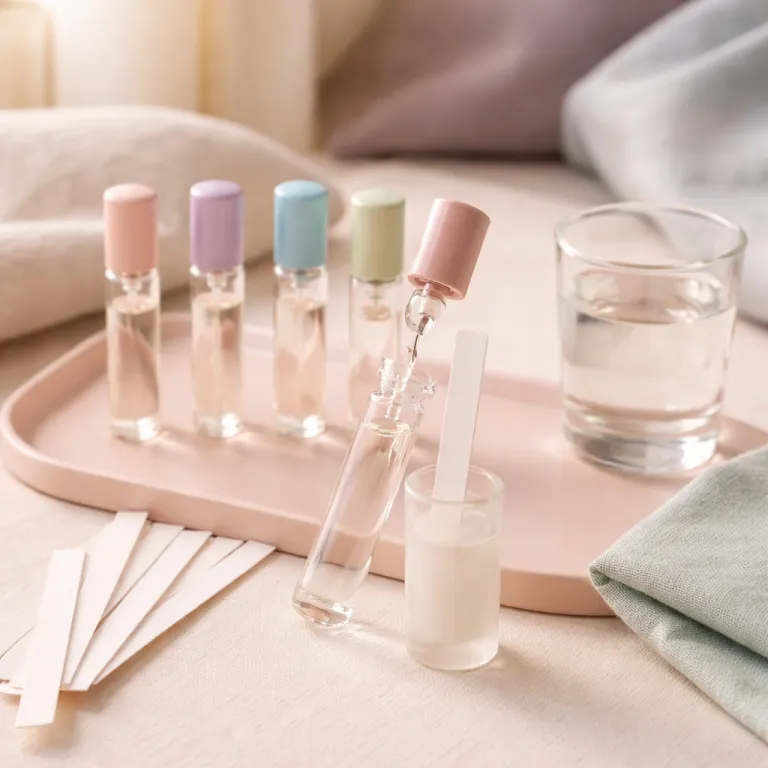
Sampling is where perfume for beginners either becomes joyful or overwhelming. Department store counters bombard you with competing scents, sales pressure, and ambient fragrance noise that makes it impossible to understand how a single perfume develops on your skin over time. A better strategy is to bring the testing home with a small set of perfume samples or decants and a simple notebook.
Think of each sample as a tiny laboratory for learning how perfumery materials behave on your skin. Spray one scent on one wrist only, ideally on clean, unscented skin, then give it at least four hours before you judge it, because base notes often take their time to appear. Write down your first impression of the smell, then check back after thirty minutes and again after two hours, noting how the scent notes shift from bright and fresh to deeper, warmer, or perhaps slightly sour depending on your skin chemistry.
Budget wise, spending 5 to 15 dollars on a sample or a small discovery set is a far better use of money than dropping 90 dollars on a full bottle that you might dislike by week three. Decant services and brand discovery sets have quietly democratized access to niche fragrances, letting people test complex compositions without committing to a full bottle. When you approach sampling this way, you are not surrendering your chance to find a signature scent; you are simply giving yourself the time and data you need to make a choice that feels like you, not like an algorithm.
Understanding materials, concentration, and the way perfume sits on skin
Behind every bottle of perfume for beginners lies a blend of perfumery materials dissolved in perfumer alcohol, sometimes with a touch of water or other solvents. The concentration of aromatic materials determines whether a scent is sold as an eau de toilette, an eau de parfum, or a more intense extrait, and that concentration changes how long the fragrance clings to your skin. Eau de toilette usually feels more fresh light and airy, while eau de parfum tends to have richer base notes and a longer presence in the air around you.
Many beginner perfume lovers worry about “strong” fragrances, but strength is not only about concentration, it is also about the specific essential oils, aroma molecules, and resins used in the formula. A citrus eau de parfum built around bergamot, neroli, and light woods can feel more transparent than a dense, spicy eau de toilette packed with patchouli and amber, because the scent notes themselves project differently. When you read a formula that lists essential oils like lavender, vetiver, or cedarwood, remember that these raw materials bring their own weight, texture, and diffusion to the final scent.
Skin chemistry is the quiet collaborator in this process. The same beginner perfume can smell creamy and smooth on one person, but sharp and thin on another, depending on skin pH, diet, medication, and even climate. This is why perfume making and making perfume at home with essential oils rarely gives beginners a reliable result; without understanding how perfumery materials interact with perfumer alcohol and with your own skin, you are essentially guessing in the dark.
From safe picks to personal wardrobe: choosing what deserves your money
Mass retailers push a narrow set of bestsellers so hard that perfume for beginners often ends up smelling the same on everyone. Those safe picks exist for a reason, because they offer broadly appealing fresh scents with clean musks, soft florals, and a hint of sweetness that offends no one in an office. They can be a perfectly fine start, but they should not be the only voices in your fragrance wardrobe.
Some mainstream perfumes genuinely earn their place as teaching tools, especially those that clearly showcase a single fragrance family like citrus aromatic, powdery floral, or woody amber. Others are so overexposed that wearing them feels less like self expression and more like putting on a uniform, especially at special occasions where half the room seems to share the same smell. This is where exploring a few niche fragrances through samples can be powerful, not because niche is automatically better, but because it often gives you more distinctive scent notes and more interesting base notes for the same price as a heavily marketed designer bottle.
As you build your own set of scents, think in terms of situations rather than trends. You might want one fresh light eau de toilette for daytime, one softer gourmand eau de parfum for evenings, and one quiet, almost skin like perfume that feels right when you do not want to announce yourself. If you want a deeper dive into how a modern fragrance wardrobe can look at home, look for a recent article on the shift away from a single signature scent in contemporary perfume culture from a credible beauty or lifestyle outlet.
Sampling strategy, not pressure: how to give yourself permission
The most helpful mindset for perfume for beginners is to treat this as an ongoing beginner guide to your own senses, not as a test you can fail. You are allowed to like what critics dismiss, to dislike cult niche fragrances, and to change your mind about a scent after living with a sample for a week. You are also allowed to walk away from perfume entirely on days when your skin, your mood, or your environment simply do not want any extra smell.
When you feel overwhelmed by choice, return to the basics. One sample, one wrist, one day, one short note in your notebook about how the perfume made you feel and how the scent notes evolved from top to base notes over time. Over a month, those small observations will tell you more about your taste than any list of “best beginner perfume” ever could, because they are grounded in your own skin chemistry and your own life.
Fragrance is a tool, not a requirement. Some people will eventually fall in love with perfume making or even making perfume at home, experimenting with essential oils and perfumer alcohol to understand how fragrances are built from the ground up. Others will simply keep a small family of three or four perfumes for special occasions and daily wear, and some will decide that their truest signature scent is clean skin and fresh air — all of those choices are valid, and none of them mean you have surrendered your chance to appreciate the art of perfumery.
Key figures that shape the beginner perfume landscape
- Global fragrance sales reached roughly 45–50 billion US dollars in 2022–2023, and analysts consistently report that a significant share of growth comes from younger consumers aged roughly 20 to 35 who are exactly the perfume for beginners audience described here (see, for example, Euromonitor International’s “Fragrances in the World” 2023 report and Statista’s global fragrance market overviews for 2022–2023).
- Industry surveys from retailers like Sephora and Ulta show that discovery sets and perfume samples account for a growing portion of fragrance transactions, with some reports indicating double digit percentage growth year on year as people test more before buying full bottles (for instance, Sephora’s 2022 and 2023 trend briefings highlight the rise of sampler kits and travel sprays).
- Consumer research cited by BeautyMatter and similar publications notes that gourmand and sweet leaning fragrances have climbed into the top three preferred fragrance families for younger buyers, which explains why soft, milky gourmand scents feel so accessible to beginners (see BeautyMatter’s coverage of fragrance trends in 2021–2023).
- Studies on olfactory fatigue suggest that the human nose can accurately evaluate only a limited number of strong scents in a short period, often around four to six perfumes, which supports the advice to avoid testing too many fragrances at once at a crowded counter (for example, research summarized in the journal Chemical Senses and in reviews of olfactory adaptation published between 2015 and 2022).
- Price analysis across major retailers shows that a typical designer eau de parfum bottle now often sits around 80 to 120 US dollars, while individual samples or discovery set vials range from 3 to 15 dollars, making sampling a far lower risk way to explore perfume notes and fragrance families (based on 2023–2024 price ranges visible on large beauty retailers and department store websites).
FAQ: perfume for beginners
How many perfumes should a beginner own to start?
For most perfume for beginners journeys, three to five perfumes are more than enough. Aim for one fresh light daytime scent, one slightly deeper option for evenings or special occasions, and perhaps one soft gourmand or cozy skin scent if you enjoy sweetness. This small family of fragrances gives you variety without overwhelming your nose or your budget.
What is the best way to test a new scent on my skin?
Apply one or two sprays of the perfume on clean, unscented skin, ideally on the inside of your wrist or the crook of your elbow. Avoid rubbing your wrists together, because that can disturb the top notes and change how the scent opens. Then give the fragrance at least four hours to move from top notes to base notes before you decide whether it suits you.
Should beginners focus on eau de toilette or eau de parfum?
Eau de toilette usually feels lighter and more transparent, which many beginners appreciate for daytime wear. Eau de parfum has a higher concentration of aromatic materials, so it often lasts longer and feels richer on the skin. The best approach is to try perfume samples of both concentrations in the same fragrance family and see which texture you prefer over time.
Are niche fragrances worth it for someone just starting out?
Niche fragrances can be very rewarding for perfume for beginners because they often explore unusual scent notes or more focused fragrance families. However, they also tend to be more expensive, so it is wise to use perfume samples or discovery sets rather than buying full bottles immediately. If a niche scent still feels compelling after several wears, that is a strong sign it deserves a place in your wardrobe.
Can I make my own perfume as a beginner?
Making perfume at home with essential oils and perfumer alcohol can be an interesting way to understand perfumery materials, but it is not the easiest path for beginners. Professional perfume making relies on precise measurements, complex aroma molecules, and a deep understanding of how base notes and top notes interact over time. If you are curious, start by studying how your favorite perfumes list their scent notes and fragrance family, then experiment slowly with very small test blends rather than trying to create a full signature scent immediately.